Agronomy Update
Apr 06, 2026
Spring Fertilizer is Becoming Hard to Find
What started as just high prices has turned into a worse case scenario in the fertilizer world. Back in December, dealers and farmers were cautious about buying nitrogen when the prices were as high or even higher than they were a year ago, and the commodity prices were substantially lower. It was hard to find any crops that could pencil out to show a profit with those prices. Now, just finding tons that can be bought has become a challenge.In January, we saw the first spike in prices after Ukraine had targeted two Russian nitrogen manufacturing facilities. About this same time, India announced another tender for 1.5 million tons of urea that had not been expected until after our spring application season. We had bought another layer of urea at this point, and I was looking at buying options to cover our risk when these prices dropped back to normal. Well, normal has now left the building and we can only wish for those price levels now.
When the bombs started flying in the middle east, worldwide nitrogen prices reacted just as expected. Urea prices have gone up close to $300 per ton and the main problem will be securing tons that can make it to our plants and your fields in time for application season and possibly even top dress timing. The US depends on importing about 1 million to 1.5 million tons of urea in April and May and a lot of those tons normally come from the middle east or northern Africa. We have seen production shut down since a lot of the gas to produce these tons comes out of Israel, Quatar and the UAE. I have heard that some of the gas production facilities in these areas have also been damaged from missile attacks from Iran that could take up to ten years to repair. India is one of the largest consumers and producers of urea in the world and produces a lot of their nitrogen using gas bought from this region. If they end up doing more tenders, that is more urea off the world market.
Product that was produced and ready to be shipped has been caught on the wrong side of the Straight of Hormuz. Now that April has arrived, that product is unlikely to alleviate our spring shortage even if it finally does get past the Straight. It is 30 to 45 days transit time to the gulf ports, then another week or two on barges to get to rail terminals to ship to dealers. This will be late May at earliest now. That is if these vessels were to come to the US, which is no guarantee either. The world market for urea has been as much as $100 per ton higher than the US market, so there will be a lot of competition for any vessels and if they do come to the US, it will probably be at higher prices. Some suppliers have already filed forced majeure on tons they know they will not be able to get.
This problem, which was mainly affecting the nitrogen market has now become a huge issue with the phosphate markets. It takes both ammonia and sulfur to produce phosphate fertilizers and there is a lot of sulfur sourced out of the middle east. Prices on sulfur have already hit all-time highs, so I will expect phosphate prices to continue to rise through the spring and summer. Morocco produces more phosphate fertilizers than any other producer in the world and they have already announced production cuts of up to 30%. Our phosphate prices have been high for the past 5 years, with the countervailing duties (CVD's) put on Moroccan and Russian producers eliminating US imports of cheaper tons from these countries. The US government is now going to investigate the unfair practices of North American phosphate producers (aided by the US government), so I think the CVDs will go away. However, with everything going on in the middle east, that will not affect prices at this point. The correction we expected at the end of the CVD's will be overtaken by the increased price of production caused by the problems in the middle east.
All of these issues affecting fertilizer markets will not be solved any time soon and will also depend on how much additional damage is done to natural gas production, nitrogen production and sulfur production in Iran and the middle east along with Russia. If we see more destruction of infrastructure related to fertilizer production, this could create supply issues for many years. Short term, I think the US government will be paying farmers in some way for extra fertilizer costs since it was a direct result of an act of war, and that has already by mentioned by President Trump. Long term, I can't imagine that commodity prices will not be impacted by energy and fertilizer prices and that will eventually make input prices more affordable. I have said that we will need a disaster to happen in somebody's back yard to correct commodity prices, and I think everyone will get a bite out of this rotten pie. Hang on, this is going to be a bumpy ride that could easily last for longer than this year.
John Salvevold, CCA
Agronomy Division Manager
Taking The Fight to Herbicide Resistant Kochia
This year your weed management program might need to look a little different. With the expansion of lentil acres over the past two years, weeds like kochia have become more problematic and, as we have discussed before, this weed is a prolific seed producer and spreads easily across the landscape. As it stands today, the majority of kochia in our area is resistant to Group 2 herbicides and glyphosate (Roundup), while Group 14 resistance is on the rise.Recent genetic testing across 17 fields in our region highlights just how widespread the issue has become. Glyphosate resistance was found in 94% of fields, while Group 14 resistance showed up in 76%. Looking at individual plants, 69% were resistant to glyphosate, 40% to Group 14, and 33% were resistant to both. Group 14 products include familiar tools like Sharpen, Spartan, Aim and Valor. If you applied Valor last fall and plan to follow with glyphosate and Sharpen this spring, you will likely have kochia escapes.
Taking a proactive approach now may cost a bit more upfront, but it can prevent bigger problems down the road. Kochia seed only survives for one to three years, with most germinating in the first year. That means if you can prevent seed production for two to three seasons, you can significantly reduce populations and slow the spread of resistance. The key is using tank mixes with multiple effective modes of action.
Group 15 residual herbicides are strong partners with Group 14 products for controlling resistant kochia. Research has shown that combining products like Valor with a Group 15 herbicide such as Zidua (pyroxasulfone) can provide excellent control of both susceptible and resistant kochia plants (image below).

Photo credit: Dr. Brian Jenks, NDSU. Fierce is a combination of Valor plus Zidua.
If you applied a Valor/Anthem Flex program last fall, you're in a strong position this spring. A solid burndown combined with good crop competition can help keep lentil or pea fields clean as possible. In fields without a fall program, it is even more important to include an effective mode of action for Group 14-resistant kochia in your spring application. In addition to the Group 15 products, options like metribuzin (Group 5) may also fit depending on soil characteristics.
Herbicides aren't the only tool to consider; seeding rate can also play a significant role in weed control and yield. Research from Saskatchewan shows that increasing seeding rates can reduce weed biomass. For example, increasing from 130 to 190 seeds per square meter, roughly 12 to 17 plants per square foot, cut weed biomass in half when only glyphosate was used (black line/dots in chart below). Pushing rates even higher led to greater reductions. These seeding rates roughly translate to 49, 71, and 97 lbs.IA of CDC Richlea.
Group 15 residual herbicides are strong partners with Group 14 products for controlling resistant kochia. Research has shown that combining products like Valor with a Group 15 herbicide such as Zidua (pyroxasulfone) can provide excellent control of both susceptible and resistant kochia plants (image below).
Photo credit: Dr. Brian Jenks, NDSU. Fierce is a combination of Valor plus Zidua.
If you applied a Valor/Anthem Flex program last fall, you're in a strong position this spring. A solid burndown combined with good crop competition can help keep lentil or pea fields clean as possible. In fields without a fall program, it is even more important to include an effective mode of action for Group 14-resistant kochia in your spring application. In addition to the Group 15 products, options like metribuzin (Group 5) may also fit depending on soil characteristics.
Herbicides aren't the only tool to consider; seeding rate can also play a significant role in weed control and yield. Research from Saskatchewan shows that increasing seeding rates can reduce weed biomass. For example, increasing from 130 to 190 seeds per square meter, roughly 12 to 17 plants per square foot, cut weed biomass in half when only glyphosate was used (black line/dots in chart below). Pushing rates even higher led to greater reductions. These seeding rates roughly translate to 49, 71, and 97 lbs.IA of CDC Richlea.

Effect of seeding rate and herbicide applications on weed biomass. Points represent 11 site years. Source: Weber, et al (2020).
While seeding rate had a reduced effect on weed biomass when a residual herbicide was used (red line/dots), it becomes more valuable where residual herbicide programs have gaps due to resistant weeds or where lack of rainfall reduced incorporation.
In studies conducted by Montana State University, seeding rates at or above 22.5 plants per square foot (~60 lb/A for Richlea), consistently out-yielded lower seeding rates.
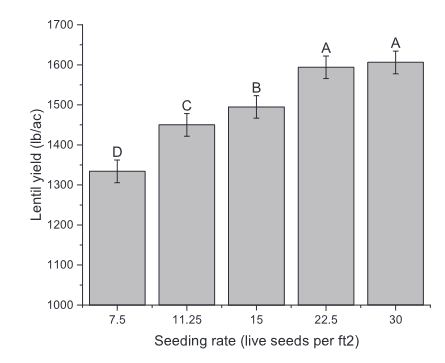
Lentil yields by seeding rate. Data represents 9 site years (2019-2021) across Montana. Source: Bourgault, et al (2023).
Lower than expected emergence rates likely contributed to the strong response to increased seeding rate. Even when adjusted for germination, actual emergence in these studies ranged from just 44% to 68% which well below the expected 80%.
Lentil emergence could be highly variable across fields due to compaction and soil-borne diseases, so increasing your seeding rate could help ensure you hit the recommended plant density. To precisely calculate seeding rates submit seed for germination testing and determine seeds per pound. The ND State Seed Department offers this service.
Herbicide resistance testing for kochia is available from the National Ag Genotyping Center. If you suspect escapes are due to resistance this spring, we can help you with sample collection and submission.
In the end, managing herbicide-resistant kochia comes down to staying ahead of the problem. Relying on the same program year after year is not going to work. By combining multiple effective herbicide modes of action, using residual products, and supporting those tools with higher seeding rates and strong crop competition, you can reduce weed pressure now and protect your fields for the future.
Dr. Audrey Kalil, CCA
Agronomist & Outreach Coordinator
Spring Residual Herbicide Program with Anthem Flex and Authority Supreme
Anthem® Flex and Authority® Supreme are valuable tools for managing early-season weeds in lentils, soybeans, chickpeas, and field peas. Their strong residual activity helps protect yield potential, particularly in fields with herbicide-resistant broadleaf (groups 2, 9 & 14) and grass weeds (groups 1 & 2). The proper application timing, attention to soil characteristics, and integration with other weed control strategies are essential for maximizing performance and crop safety.

Active Ingredients: Pyroxasulfone (Group 15) + Carfentrazone (Group 14)
Primary Use: Pre-emergent residual herbicide labelled for use in lentils, soybeans, chickpeas, field peas, corn, sunflower, spring & winter wheat
Target Weeds: green & yellow foxtail, barnyardgrass, kochia, lambsquarters, pigweeds, and other small-seeded broadleaves
Use in Lentils
- Provides strong residual control of annual grasses and select broadleaf weeds
- Recommended application rates for lentils for North Dakota and Montana are 3.25 - 4.5 oz/A
- Often used as a residual program to manage resistant kochia and pigweed
- Significant rainfall event is needed for activation - applying as early as possble in the spring is ideal for optimum activity
- Crop safety is generally high when applied preplant or pre-emergence on lentils
Active Ingredients: Sulfentrazone (Group 14) + Pyroxasulfone (Group 15)
Primary Use: Pre-emergent residual herbicide in soybean, field pea, chickpea and sunflower.
Target Weeds: kochia, russian thistle, lambsquarters, pigweed species, nightshade, and annual grasses (green foxtail, yellow foxtail and barnyardgrass).
Use in Soybeans, Field Pea, Chickpea and Sunflower
- Strong fit in no-till and minimum till systems due to consistent soil activity.
- Rainfall required for activation. Less rainfall needed at start versus Anthem Flex.
- Must be applied preplant or pre-emergence.
- Application rate of 5.8 oz/A delivers 3 oz of Spartan 4F and 3 oz of Zidua.
- Soil pH and organic matter influence crop tolerance and herbicide persistance.
- Use lowest rates on sandy soils with low organic matter and high pH to reduce injury risk.
Ryan Hunt
Technical Services Manager
FMC, Northern Plains
Establishing a Strong Alfalfa Stand: Tips for Spring Seeding Success
Spring seeding alfalfa is a great opportunity to set up a strong, productive stand that can last for years. One of the main advantages of spring planting is the opportunity to harvest at least one crop in the establishment year when managed properly. Spring conditions tend to offer more consistent moisture than summer, but timing and soil conditions really matter. Try to avoid planting into wet or compacted soil, ensure good seed-to-soil contact and wait until soil temperatures reach at least 45 to 50°F so seedlings can get off to a good start.Before planting, it's worth taking the time to run a soil test. This helps ensure your pH and nutrient levels are where they need to be and gives you a chance to correct any deficiencies. Nutrients like phosphorous and potassium are vital for achieving maximum alfalfa yields. Low organic matter, or sandy soils may also benefit from the addition of sulfur. Alfalfa is sensitive to soil salinity; however, this may be mitigated by early spring planting when salts are lower in the soil profile due to rain and snow melt.
In cool spring soils, disease management is critical to establishing a healthy stand. Select a variety with resistance to the common seedling diseases like Phytophthora and Aphanomyces. CROPLAN® AA varieties were specifically developed for these challenges, with LegenDairy AA and Rebound AA being top performing varieties in our region. The use of fungicide seed treatments for Pythium seed rot and proper inoculation can further enhance germination and seedling vigor. Herbicide carryover can hurt young alfalfa seedlings as well, so think back to what was applied in previous years and double-check labels and rotation guidelines.
Early weed control plays a major role in establishment success. Starting with a clean field and staying on top of weeds will go a long way in helping your stand establish without competition. Roundup ready varieties can help keep fields free of glyphosate susceptible broadleaf and grass weeds.
Plant competition will help control weeds, so maintain proper seeding rates to achieve optimal stand density. On irrigated ground, 15-20 pounds per acre is typical, while dryland usually needs about half that. Plant shallow-about ¼ to ½ inch deep in heavier soils and up to 1 inch in sandy ground. The goal is to end up with 25-30 plants per square foot within the first month under irrigation. After planting, keep an eye on the field so you can catch any early issues with weeds, insects, or disease.
On more erosion-prone ground, a companion crop can help stabilize the seedbed and protect young alfalfa seedings. If using a companion crop such as oats, barley, or wheat, spraying when it reaches about 6 inches in height can reduce competition and minimize injury to the alfalfa.
Ultimately, the first 60 days are the most critical period in the life of an alfalfa stand, as early management decisions will determine long-term productivity. Avoiding shortcuts during establishment ensures the stand remains productive for years to come. Spring seeding provides an excellent opportunity to establish a persistent and high-performing alfalfa stand, and by following best practices in seedbed preparation, variety selection, seed treatment, and early management, growers can set their crop up for long-term success. For more detailed guidance, reach out to your Horizon Resources Agronomist.
Curt Droogsma, CCA
Winfield United
Early weed control plays a major role in establishment success. Starting with a clean field and staying on top of weeds will go a long way in helping your stand establish without competition. Roundup ready varieties can help keep fields free of glyphosate susceptible broadleaf and grass weeds.
Plant competition will help control weeds, so maintain proper seeding rates to achieve optimal stand density. On irrigated ground, 15-20 pounds per acre is typical, while dryland usually needs about half that. Plant shallow-about ¼ to ½ inch deep in heavier soils and up to 1 inch in sandy ground. The goal is to end up with 25-30 plants per square foot within the first month under irrigation. After planting, keep an eye on the field so you can catch any early issues with weeds, insects, or disease.
On more erosion-prone ground, a companion crop can help stabilize the seedbed and protect young alfalfa seedings. If using a companion crop such as oats, barley, or wheat, spraying when it reaches about 6 inches in height can reduce competition and minimize injury to the alfalfa.
Ultimately, the first 60 days are the most critical period in the life of an alfalfa stand, as early management decisions will determine long-term productivity. Avoiding shortcuts during establishment ensures the stand remains productive for years to come. Spring seeding provides an excellent opportunity to establish a persistent and high-performing alfalfa stand, and by following best practices in seedbed preparation, variety selection, seed treatment, and early management, growers can set their crop up for long-term success. For more detailed guidance, reach out to your Horizon Resources Agronomist.
Curt Droogsma, CCA
Winfield United
Watch Out for Winter Annual Weeds
While kochia tends to grab the headlines as the most troublesome spring weed, a number of other species deserve equal attention. This spring, expect to see more winter annual weeds. Wet conditions during harvest last fall allowed winter annual seeds to germinate and establish before winter set in.Winter annuals germinate in early to late fall, overwinter as small rosettes, and are among the first plants to break dormancy in spring. In my travels across the region this week, the dominant green I am seeing in fields is not kochia, it is winter annual weeds thriving in the mild spring conditions we have had so far (the recent
blizzard notwithstanding).
Below is a breakdown of the winter annuals you are most likely to encounter this season, organized into three categories: the harmless, the easy to control, and the tough to control.
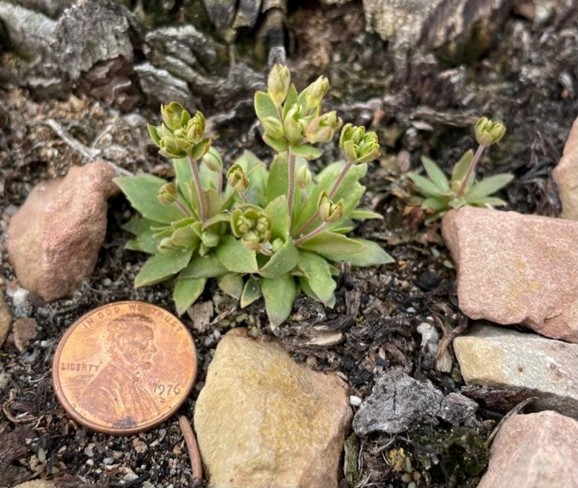
(Photo credit: S. DeSimini)
Fairy Candelabra has a very compressed lifecycle: it emerges in April, bolts to only a few inches tall, flowers briefly, sets seed, and completes its life cycle before the end of May.
This weed poses little to no economic threat. It is not competitive, consumes minimal soil moisture, and is easily controlled with glyphosate. For practical purposes, consider it a free pass.
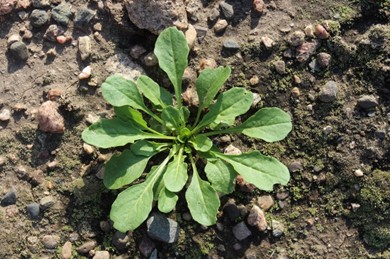
Field Pennycress
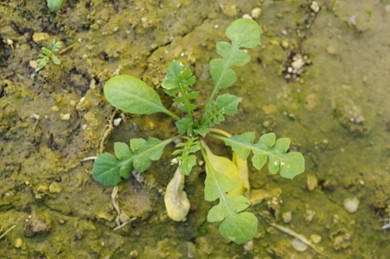
Shepherd's Purse
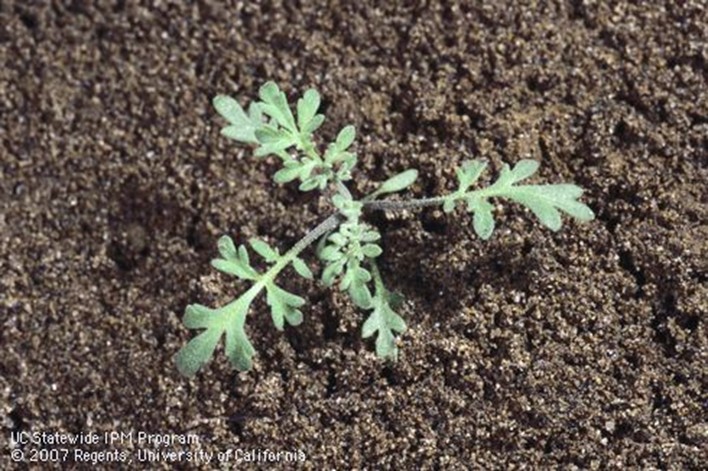
Tansy Mustard/Flixweed
These three winter annuals make up the bulk of what most producers encounter each spring. All belong to the mustard family and share a similar growth habit: vegetative rosettes that bolt into reproductive mode as temperatures climb.
blizzard notwithstanding).
Below is a breakdown of the winter annuals you are most likely to encounter this season, organized into three categories: the harmless, the easy to control, and the tough to control.
The Harmless
At a quick glance, Fairy Candelabra can be mistaken for kochia. Both emerge as rosettes with a pale green color and hairy leaves. A closer look reveals significant differences.(Photo credit: S. DeSimini)
Fairy Candelabra has a very compressed lifecycle: it emerges in April, bolts to only a few inches tall, flowers briefly, sets seed, and completes its life cycle before the end of May.
This weed poses little to no economic threat. It is not competitive, consumes minimal soil moisture, and is easily controlled with glyphosate. For practical purposes, consider it a free pass.
The Easy to Control
Field Pennycress
Shepherd's Purse
Tansy Mustard/Flixweed
These three winter annuals make up the bulk of what most producers encounter each spring. All belong to the mustard family and share a similar growth habit: vegetative rosettes that bolt into reproductive mode as temperatures climb.
Tansy Mustard (aka Flixweed) is the easiest to distinguish, with fine, deeply lobed leaves and a gray-green hue. A dense patch can resemble early kochia from a distance, but the characteristic leaf shape sets it apart up close.
Field Pennycress and Shepherd's Purse are more easily confused with each other. Both share a similar green hue and rosette form. The key difference is leaf margins. Field Pennycress leaf margins have shallow serrations while Shepherd's Purse has deeply lobed leaves. The distinction becomes clearest once plants begin to bolt.
While dense patches of any of these three species can rob soil of moisture and nutrients and impact crop growth, the good news is that all three are straightforward to control. Glyphosate paired with 2,4-D, dicamba, or both is highly effective against the entire group.
Horseweed (aka Marestail) is one of the most challenging winter annuals to manage, particularly in pulse crops where few spring-applied herbicides are both effective and crop-safe. The species shows notable tolerance, and in some cases confirmed resistance, to glyphosate.
The plant's biology compounds the difficulty: it has abundant leaf hairs, produces numerous growing points, and accumulates dust and soil debris that shield leaf surfaces from spray droplets. Even non-selective herbicides like paraquat (Gramoxone) often fail to achieve complete control, as protected growing points can regenerate after top-kill.
Recommended management by timing and crop type:
Field Pennycress and Shepherd's Purse are more easily confused with each other. Both share a similar green hue and rosette form. The key difference is leaf margins. Field Pennycress leaf margins have shallow serrations while Shepherd's Purse has deeply lobed leaves. The distinction becomes clearest once plants begin to bolt.
While dense patches of any of these three species can rob soil of moisture and nutrients and impact crop growth, the good news is that all three are straightforward to control. Glyphosate paired with 2,4-D, dicamba, or both is highly effective against the entire group.
The Hard to Control
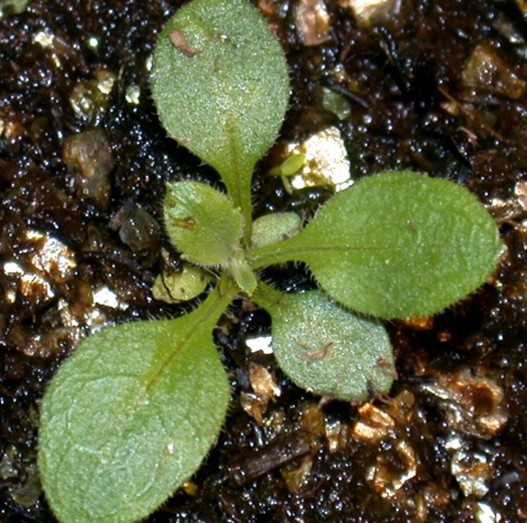
Horseweed Rosette
|
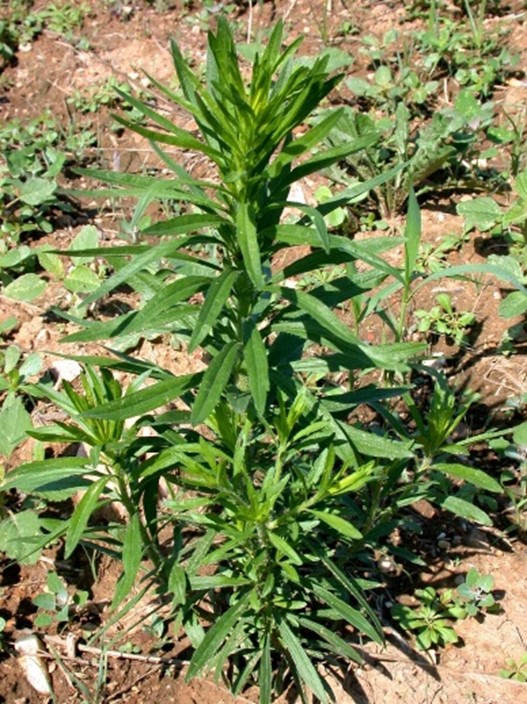 Mature Horseweeed
|
Horseweed (aka Marestail) is one of the most challenging winter annuals to manage, particularly in pulse crops where few spring-applied herbicides are both effective and crop-safe. The species shows notable tolerance, and in some cases confirmed resistance, to glyphosate.
The plant's biology compounds the difficulty: it has abundant leaf hairs, produces numerous growing points, and accumulates dust and soil debris that shield leaf surfaces from spray droplets. Even non-selective herbicides like paraquat (Gramoxone) often fail to achieve complete control, as protected growing points can regenerate after top-kill.
Recommended management by timing and crop type:
- Post-harvest (fall, preferred): Glyphosate + 2,4-D + Dicamba for emerged plants, followed by a late-fall residual application of Flumioxazin (Valor/Panther).
- Spring (pulse crops): Apply 2,4-D early (observe the required 1-month plant-back interval), then follow with Glyphosate/Sharpen or Gramoxone PRE.
- Spring (small grains): A Glyphosate base with 2,4-D + Dicamba (Brash) is a solid foundation. For heavy infestations, adding Quelex is warranted. Its active ingredient Halauxifen is highly active on Horseweed.
Narrowleaf Hawksbeard and Dandelions are grouped together because they share a similar vegetative appearance and respond to similar management strategies. While dandelion is not typically seen as an aggressive competitor due to its low growth habit, it does deplete soil moisture and nutrients.
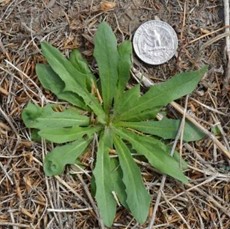
Narrowleaf Hawksbeard
|
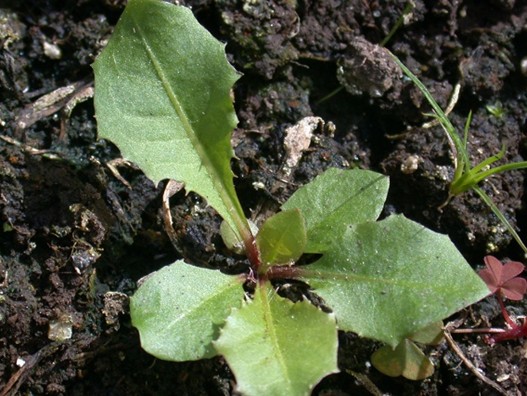
Dandelion seedling
|
Narrowleaf Hawksbeard is a more serious threat. It grows aggressively to 2-3 feet tall and can readily out-compete crops for light and resources. As with Horseweed, the most effective management begins the season before. Post-harvest application of a late-fall residual herbicide such as Valor/Panther provides excellent suppression. For situations where these weeds are already emerging in fields this spring, here are effective options:
Spring wheat and durum:
Quelex or Affinity Broadspec, both tank-mixed with 2,4-D, provide strong burndown activity on both species. For in-crop control, Huskie or Talinor can be used to finish the job.
Pulse crops:
Spring control options are more limited, but updated labeling offers a promising tool. Express herbicide is now labeled for application 24 hours prior to planting chickpeas and lentils. It shows excellent control of both Narrowleaf Hawksbeard and Dandelion. Note that adding 2,4-D, wherever crop rotation and label timing allow, provides an added margin of control that Express alone cannot match in a pulse crop setting.
Identification is Key
Take a second look at what is coming up first in your fields this spring; it is likely winter annuals. Proper identification is the critical first step toward making timely, effective management decisions. Whether you are dealing with a harmless stand of Fairy Candelabra or a tough infestation of Horseweed or Narrow Leaf Hawksbeard, knowing what you are up against puts you ahead of the game this season.Kyle Okke, CCA
Agile Agronomy LLC.
2026 Custom Seed Treatment at Horizon Resources Fairview Agronomy
We are pleased to offer a full lineup of custom seed treatment options for the 2026 growing season across wheat, pulse crops, and soybeans. Our treatments are designed to provide strong protection against early-season diseases and insects, helping maximize stand establishment and yield potential.For wheat, growers can choose from fungicide-only options like Rancona Summit and Warden Cereals II, or step up to combination fungicide and insecticide packages such as Cruiser Max Vibrance Cereals and Warden Cereals WR II, which include wireworm protection. Additional insecticide is also available with Lumivia for early season cutworm and grasshopper protection where needed.
Pulse crop treatments include Rancona Summit and Cruiser Max Vibrance Pulses. While both options include fungicides effective against soil-borne pathogens, Cruiser Maxx Vibrance Pulses offers additional protection against seed-borne Ascochyta along with wireworm control.
Soybean growers have access to Warden RTA for disease protection, along with both Lallemand Lafix liquid and peat inoculant options.
Custom application fees are as follows:
- Wheat, pea and lentil seed treating: $1.00/ bu (bulk)
- Soybean treating: $2.00/bu (bulk)
- Tote refull: $3.00/bu
To keep things running smoothly this season, please provide 1-2 days advance notice before bringing seed in for treatment. This allows us to schedule efficiently and avoid delays at the facility. Contact the Fairview location at (701) 844-5775 for pricing and to schedule seed treatment.
We look forward to helping you get your seed off to the best possible start this season.
We look forward to helping you get your seed off to the best possible start this season.
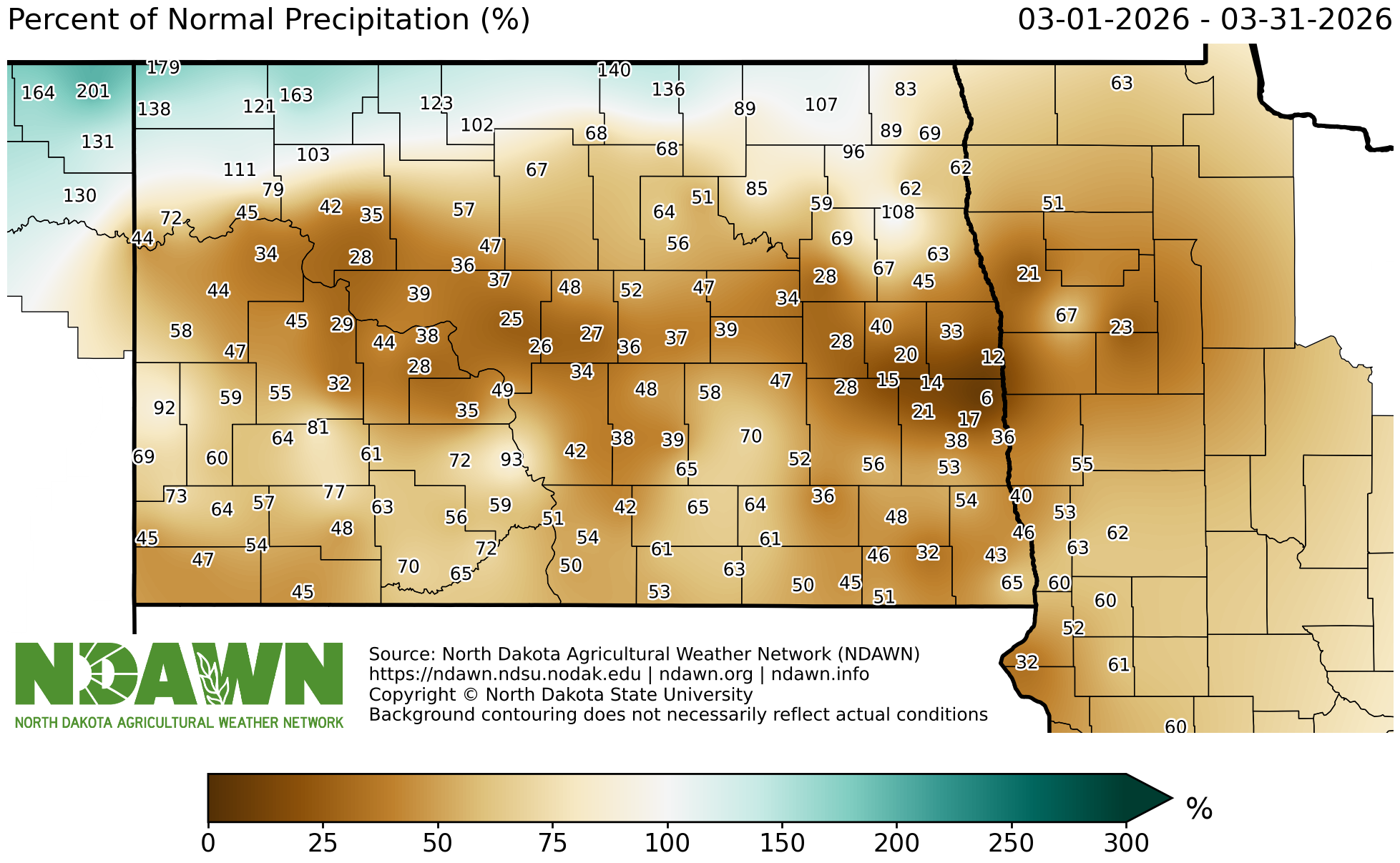
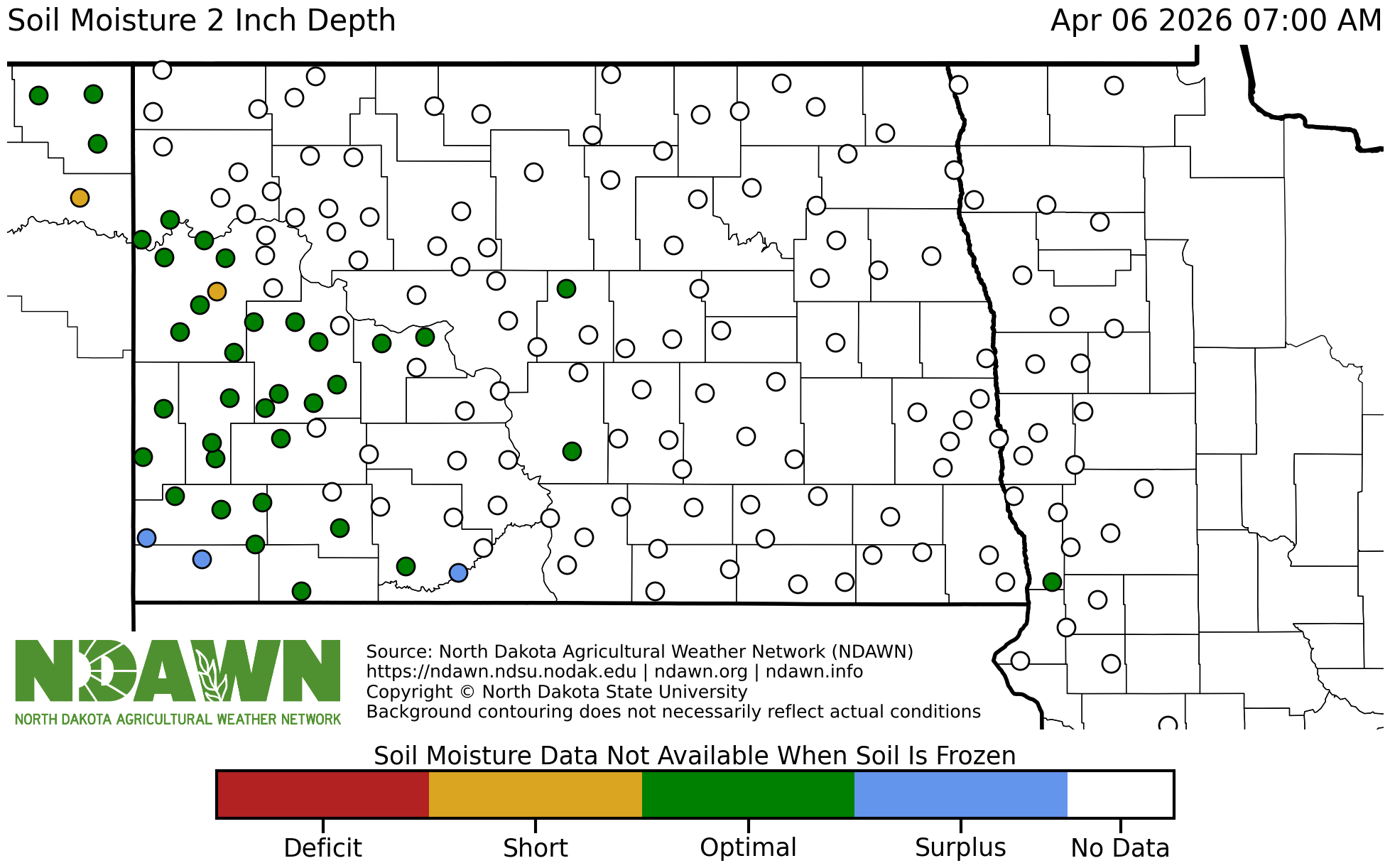
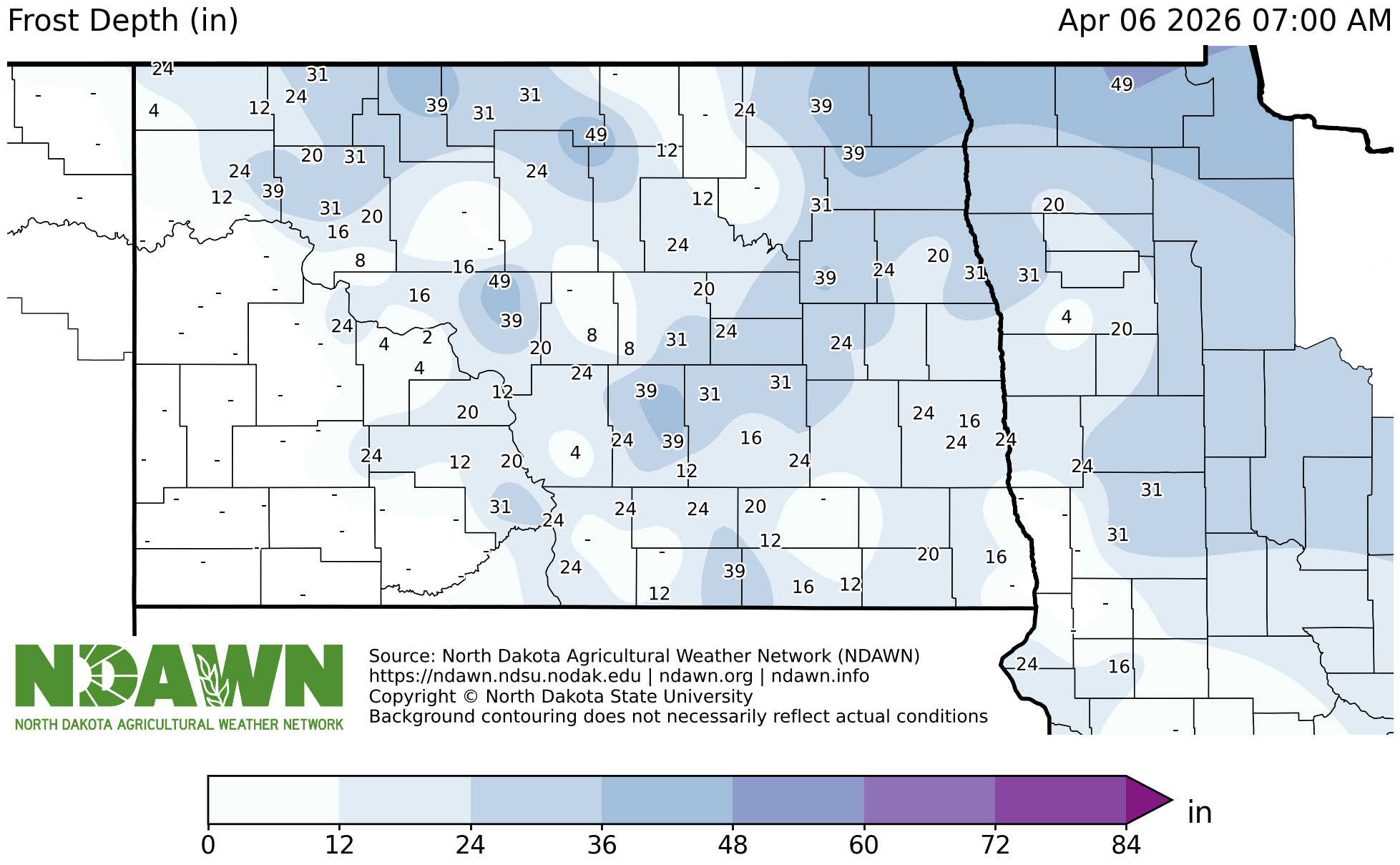
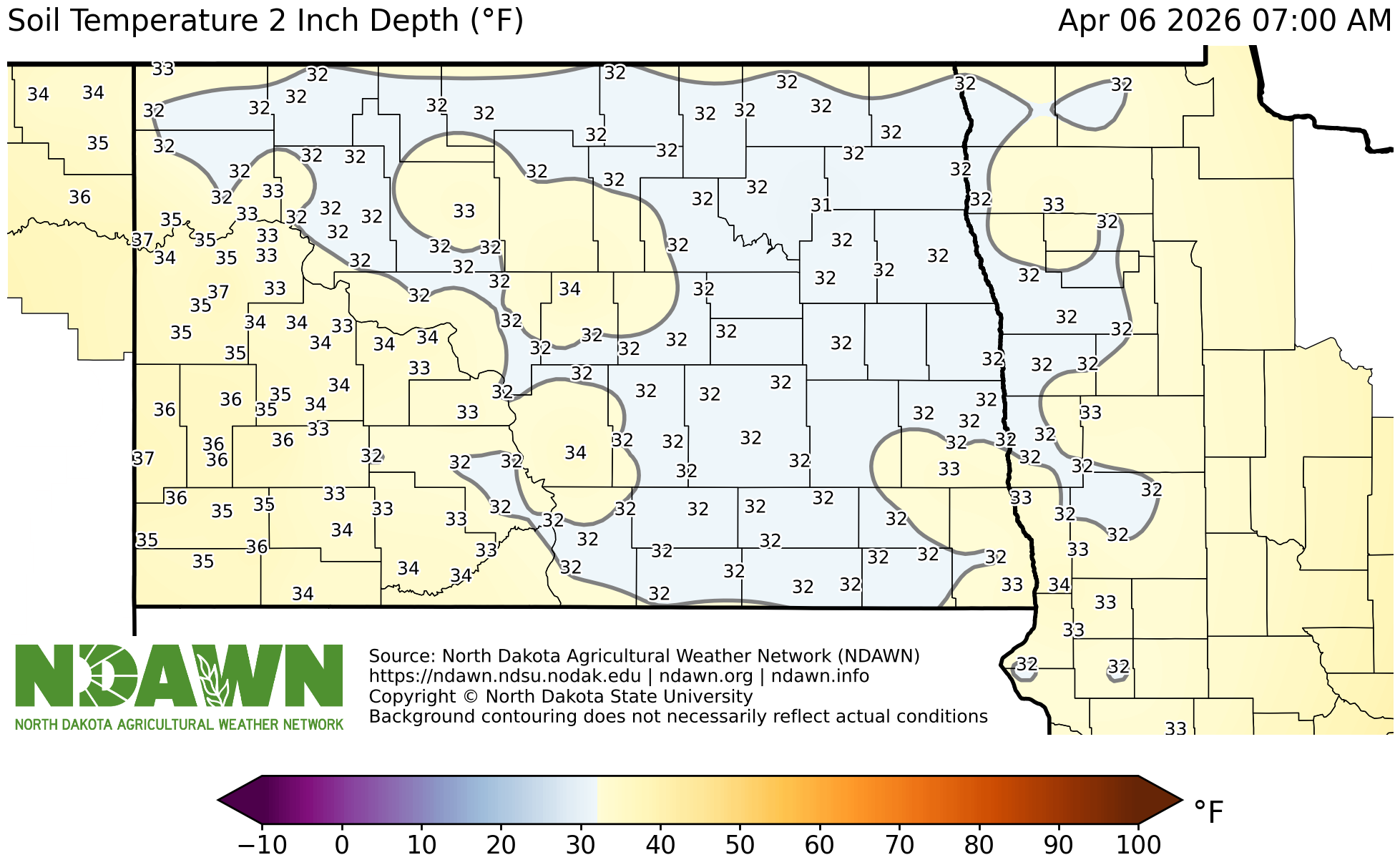
Weather Update