Agronomy Update
Jul 13, 2026
Iron Deficiency Chlorosis in Soybeans
Between my travels and the questions I've been getting called in on, I've noticed a lot of yellow soybeans out there this year. By the time you're reading this, the summer heat will have kicked into gear and those beans might not be near as yellow as they were earlier in the season. The yellow soybeans are very likely due to Iron Deficiency Chlorosis (IDC).Iron is needed to produce chlorophyll, which gives the plant its green color. Iron is generally plentiful in all of our soils, but certain soil and weather conditions can create an environment where that iron isn't soluble (available for plant uptake), and that's when the yellow soybean symptomology shows up.
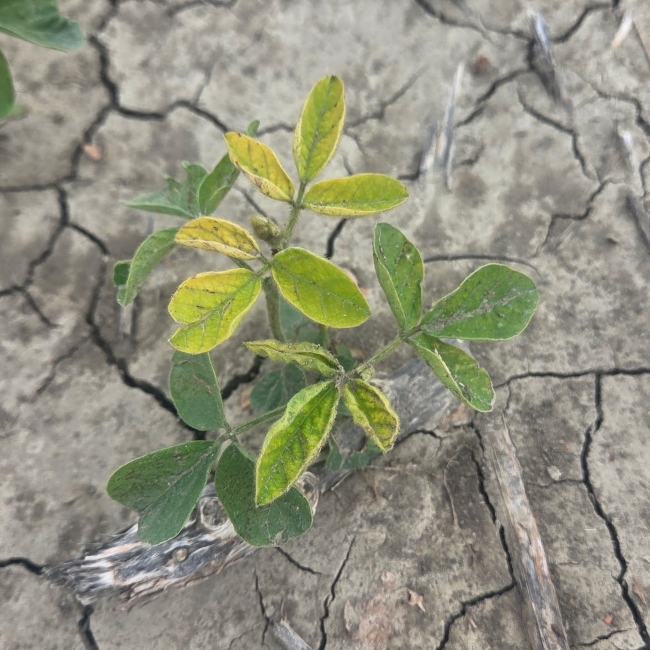
If you're seeing yellow leaves with interveinal chlorosis (the leaf veins stay dark green while the leaf itself turns yellow), and that symptomology is showing up on the newest growth at the top of the plant rather than the bottom, then you're looking at the classic symptoms of IDC (image below).
What causes IDC?
Soil
Soybean plants exude acids around their roots. Those acids help solubilize iron in the rooting zone, creating a more soluble form of iron that the plant can take up. One determining factor of iron solubility is soil pH. Soybeans generally have no trouble solubilizing iron in pH up to 7.5, but as pH climbs above that, the iron becomes increasingly insoluble.
Another factor is free lime, or calcium carbonate (CaCO3), in the soil. On a soil test result, calcium is not the same as CaCO3. If you want to measure this you have add Calcium Carbonate Equivalent, or CCE, to your analysis. The CCE measures free CaCO3 in the soil solution, which can neutralize the acids the soybean roots are exuding and in turn keep iron in a less soluble form.
Soybean plants exude acids around their roots. Those acids help solubilize iron in the rooting zone, creating a more soluble form of iron that the plant can take up. One determining factor of iron solubility is soil pH. Soybeans generally have no trouble solubilizing iron in pH up to 7.5, but as pH climbs above that, the iron becomes increasingly insoluble.
Another factor is free lime, or calcium carbonate (CaCO3), in the soil. On a soil test result, calcium is not the same as CaCO3. If you want to measure this you have add Calcium Carbonate Equivalent, or CCE, to your analysis. The CCE measures free CaCO3 in the soil solution, which can neutralize the acids the soybean roots are exuding and in turn keep iron in a less soluble form.
A third factor is soluble salts. Things like sodium can accumulate in soils and buffer out the acids that soybean roots are forming.
Weather
The soil factors are the main drivers behind visible IDC, but weather can help increase symptom severity. Cool, wet soils tend to bring it out.
It's worth thinking about from an irrigation standpoint, too: furrow irrigation leaves longer periods of soil saturation, while pivot irrigation potentially leaves less.
Combine a cool stretch of weather with when and how much a field was irrigated, and you could see real differences in IDC expression.
Other Factors
High residual nitrates in the soil have been tied to increased IDC incidence. If you're seeing IDC this year, do you have a soil test from that field you can look back on to check where residual nitrates levels were at?
Weather
The soil factors are the main drivers behind visible IDC, but weather can help increase symptom severity. Cool, wet soils tend to bring it out.
It's worth thinking about from an irrigation standpoint, too: furrow irrigation leaves longer periods of soil saturation, while pivot irrigation potentially leaves less.
Combine a cool stretch of weather with when and how much a field was irrigated, and you could see real differences in IDC expression.
Other Factors
High residual nitrates in the soil have been tied to increased IDC incidence. If you're seeing IDC this year, do you have a soil test from that field you can look back on to check where residual nitrates levels were at?
IDC Can Be Predicted (Somewhat)
A soil test that reports CCE, soluble salts, pH, and nitrates can give you a very strong indication of whether you may have IDC in a given field. So even though you don't fertilize soybeans the way you do corn, pulling a good representative soil sample with these parameters will tell you a lot about whether IDC is likely to show up in your soybean crop. The weather conditions ultimately determine whether symptoms appear, and how severe they are.
Managing IDC
Variety
Variety is the number one thing you can do to mitigate the risk of IDC. Most companies selling soybeans will publish IDC scores for their varieties. Just be mindful that a company's IDC scoring is only as good as its own lineup, because they're only comparing internally against their own varieties. That means one company's best IDC bean could be another company's worst. So a seed catalog will give you a good indicator of which variety within that brand is most tolerant, but it can't be fairly compared against another company's soybeans.
Iron Fertilizer
Iron fertilizer can be applied to soybeans, but only certain forms work. Iron with the EDDHA chelate (like the product Soygreen) is the only form proven to be available to soybeans in iron-adverse soil conditions. Iron EDDHA comes as a liquid, or as a powder mixed into a liquid. It's a very small dose and does not mix well with other fertilizers or pesticides so if you decide to go this route, you'll need to make a dedicated foliar pass or run it by itself through the liquid system on your planter.
If you've got severe IDC, this can equate to some serious yield improvements. But in marginal IDC, the yield response has been marginal too. So naturally, if you ask our neighbors about 350-ish miles to the east in the Red River Valley about adding an iron EDDHA chelate like Soygreen to their program, you'll get mixed responses.
Population
Bumping up population can ease the symptoms of IDC, but it's a pretty small increment toward overall yield improvement.
Managing IDC starts with knowing your risk for IDC, and that starts with a soil test. If you don't have that information for each field, you're just shooting in the dark on the rest of your management decisions. Once you've determined a field is at risk, then the management strategies line up from there: start with a strong IDC tolerant variety and a higher plant population, then look at iron fertilizer.
Kyle Okke, CCA
Agile Agronomy LLC.
Agronomists Happy Hour Podcast
With the frequent rainfall events in June, some fields have remained saturated for weeks and we are beginning to see pea and lentil crops exhibiting the telltale signs of root rot. Characteristic above ground symptoms are stunted plants with yellowing that starts on the lower leaves and progresses upward. In severely affected areas, bare patches develop. Symptoms often appear first in low-lying parts of the field or along drainage pathways where water collects or moves, so root rot is frequently mistaken for drowned-out areas.
If you've got severe IDC, this can equate to some serious yield improvements. But in marginal IDC, the yield response has been marginal too. So naturally, if you ask our neighbors about 350-ish miles to the east in the Red River Valley about adding an iron EDDHA chelate like Soygreen to their program, you'll get mixed responses.
Population
Bumping up population can ease the symptoms of IDC, but it's a pretty small increment toward overall yield improvement.
Putting It All Together
Managing IDC starts with knowing your risk for IDC, and that starts with a soil test. If you don't have that information for each field, you're just shooting in the dark on the rest of your management decisions. Once you've determined a field is at risk, then the management strategies line up from there: start with a strong IDC tolerant variety and a higher plant population, then look at iron fertilizer.
Kyle Okke, CCA
Agile Agronomy LLC.
Agronomists Happy Hour Podcast
Diagnosing Root Rot in Pea and Lentil
With the frequent rainfall events in June, some fields have remained saturated for weeks and we are beginning to see pea and lentil crops exhibiting the telltale signs of root rot. Characteristic above ground symptoms are stunted plants with yellowing that starts on the lower leaves and progresses upward. In severely affected areas, bare patches develop. Symptoms often appear first in low-lying parts of the field or along drainage pathways where water collects or moves, so root rot is frequently mistaken for drowned-out areas.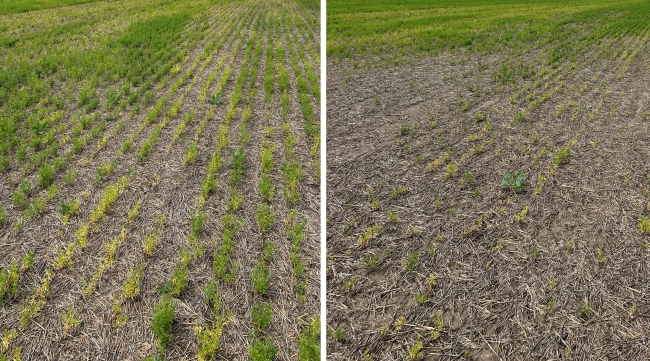
The most damaging root rot pathogen in peas and lentils, Aphanomyces euteiches, is spread through the soil by water and waterlogged plants are more susceptible to infection. As a result, disease symptoms usually appear first in wet areas. Once the roots are compromised, plants become less able to tolerate the heat and drought stress that often occurs later in the summer. So while water-saturated soils favor infection, effects on yield are greatest if warm and dry soil conditions occur post-infection
In fields with less severe infestations, root symptoms may remain hidden below ground early in the season while the crop appears healthy above ground. As the season progresses, however, the degraded root system is not able to support the plant's need for nutrients and water, resulting in premature yellowing (wilt) that could be mistaken for early crop maturity or drought stress.
To determine if above ground symptoms are due to root rot rather than water stress, herbicide injury or other abiotic factors, you have to dig up the plants to examine the roots. The roots and lower stem should be white to light tan, but infected roots are brown or black. There will also be very few nodules or lateral roots, and when Ahanomyces is the culprit you'll be able to easily wipe off the outer root tissue (epidermis) from the inner tissue.
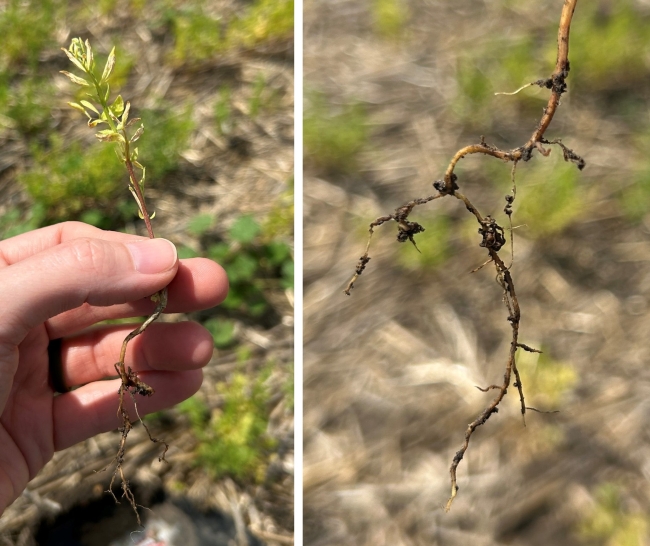
Several pathogens can cause root rot, and effective management depends on identifying which ones are present in your field. For example, Aphanomyces can survive in the soil for more than 10 years, so crop rotations must be extended substantially to reduce the risk of future disease. The National Agricultural Genotyping Center in Fargo offers testing to determine whether Aphanomyces is present in root tissue or soil. Whenever possible, submit a diseased root sample rather than a soil sample, as soil often contains multiple pathogens that may or may not be responsible for the symptoms observed in the field.
If you need help diagnosing root rot, or submitting samples to the NAGC feel free to reach out. To learn more about root rot management check out the Makoti On-Farm Field Day on July 16th (see poster below).
Dr. Audrey Kalil, CCA
Agronomist/Outreach Coordinator

Fusarium Head Blight (Scab) Risk Prediction
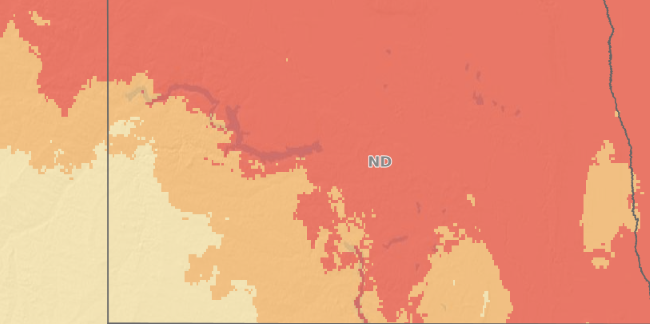
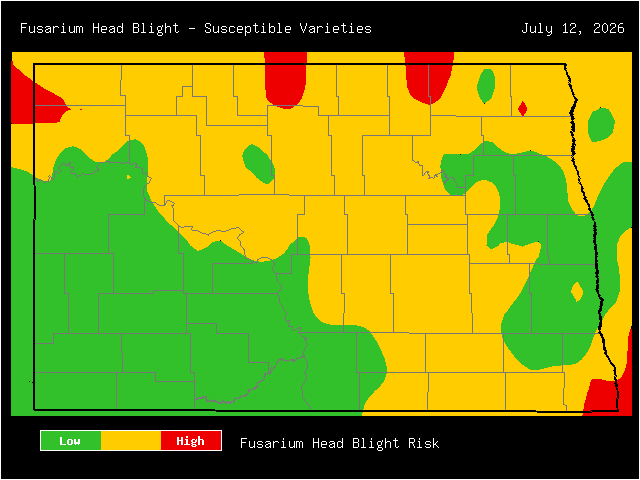
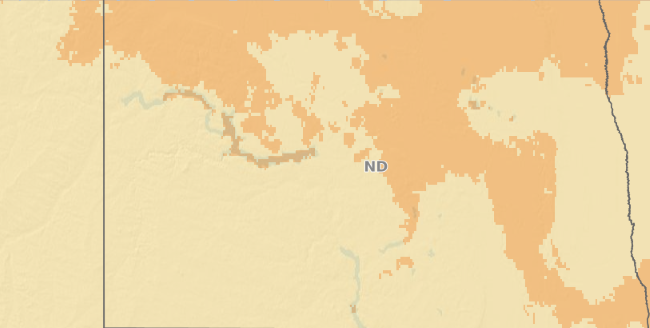
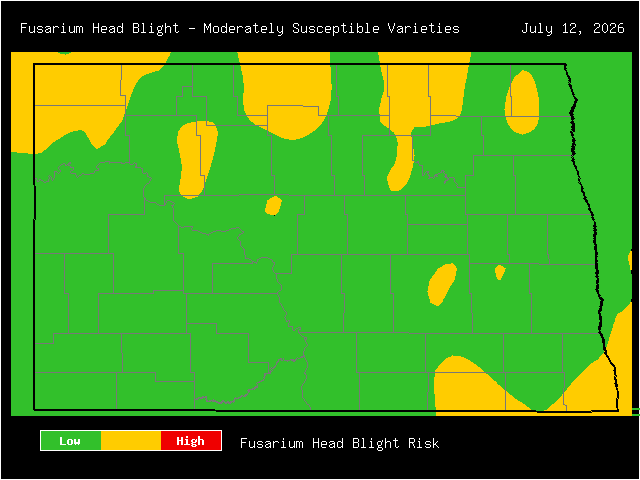
Recent hot and dry weather has reduced head scab risk in most areas. Risk remains elevated for very susceptible varieties in the northwest corner of the state according to both risk prediction models, and for susceptible varieties according to the National risk prediction model.Risk moving forward will be dictated by rainfall patterns, along with high relative humidity. Due to the localized nature of some of these storms, expect the same for Fusarium head blight risk.
Very Susceptible Varieties
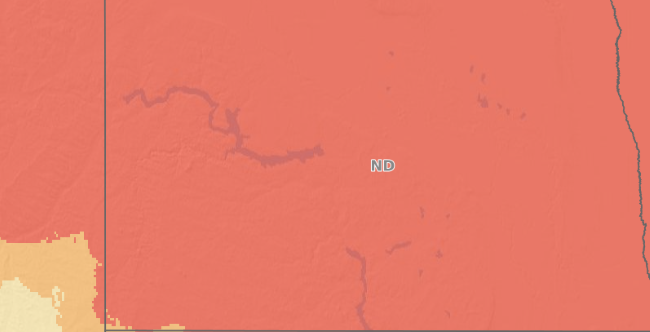
NDSU model
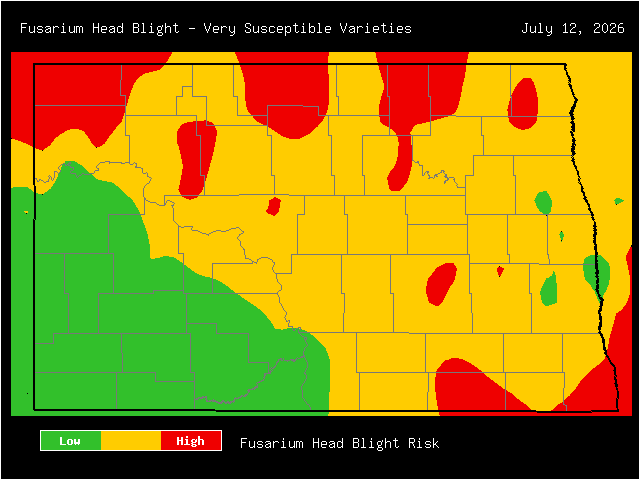
Susceptible Varieties
National risk model. July 13, 2026
NDSU model
Moderately Susceptible Varieties
National risk model. July 13, 2026
NDSU model
Foliar Disease Identification in Field Pea
With the recent rainfall and cooler temperatures, conditions have become increasingly favorable for foliar diseases as field pea crops enter flowering or podding growth stages.
Ascochyta blight, Septoria leaf spot, and bacterial blight are all more likely to develop under these conditions. Although these diseases can appear similar at first glance, recognizing their distinguishing symptoms is important for making appropriate management decisions. Below are some key differences.
Ascochyta blight
Symptoms begin as small brown to black spots that enlarge into tan to dark brown lesions with dark margins, often showing concentric rings with tiny black dots (pycnidia, the fungal fruiting bodies). Long, dark lesions on stems may girdle plants, and infected pods can develop lesions that result in discolored or shriveled seeds. Symptoms can be observed on all aboveground parts of the plant.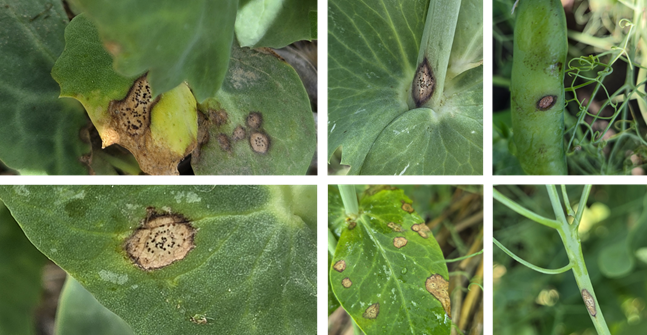
Septoria leaf spot
Small to large, irregular, brown, necrotic lesions or blotches. Tiny orange-to-black fungal structures may be scattered within the lesions. Elongated necrotic lesions can also develop on stems, though they are generally less severe than those caused by Ascochyta blight. Symptoms typically first appear on the lower leaves and progress upward through the canopy, while stem and pod infections are usually limited.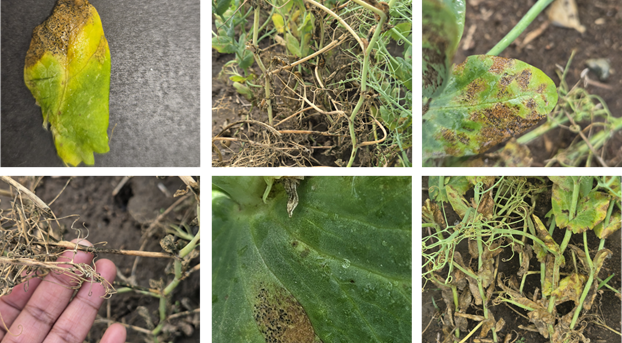
Bacterial blight
Water-soaked, translucent lesions on leaves, stems, and pods. Lesions are typically angular and vein-delimited, later turning dark brown to black as the tissue dies. On leaves, dead tissue may drop out, creating a characteristic "shot hole" appearance. Unlike Ascochyta blight and Septoria blight, bacterial blight lesions do not contain fruiting bodies (small black or brown dots).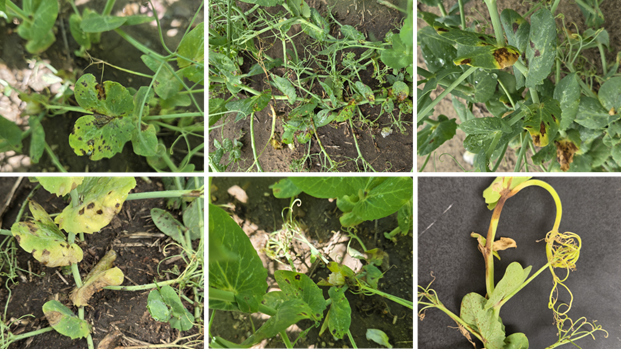
More than one of these diseases may be present in the same field. When scouting, examine lesions carefully for the presence of pycnidia and note whether symptoms are primarily water-soaked, irregular with tiny black dots, or associated with stem girdling.
The pulse crop survey is funded by the pulse crop checkoff dollars through the Montana Pulse Crop Committee.
Dr. Frankie Crutcher, MSU EARC
frankie.crutcher@montana.edu
Dr. Marie Dorval-Celestin, MSU EARC
mariedorval@montana.edu
Dr. Frankie Crutcher, MSU EARC
frankie.crutcher@montana.edu
Dr. Marie Dorval-Celestin, MSU EARC
mariedorval@montana.edu
Weather Update
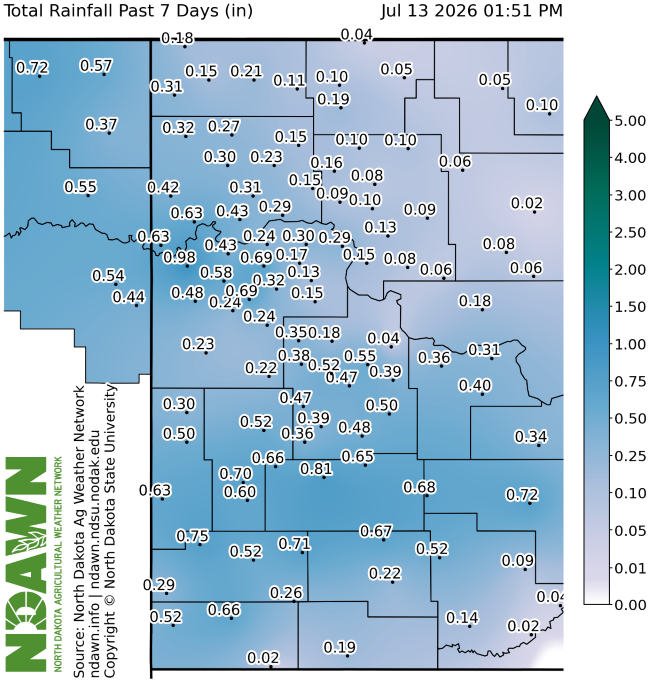
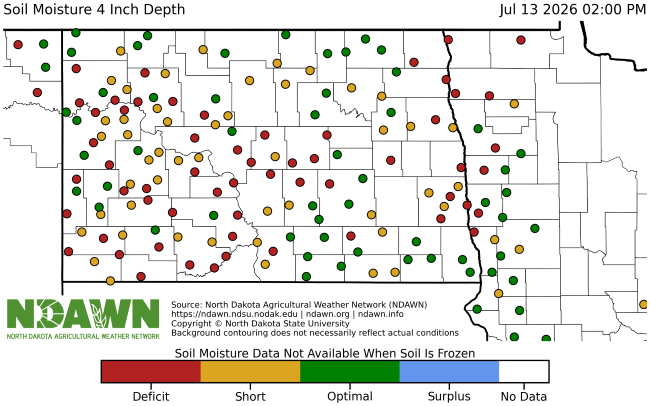
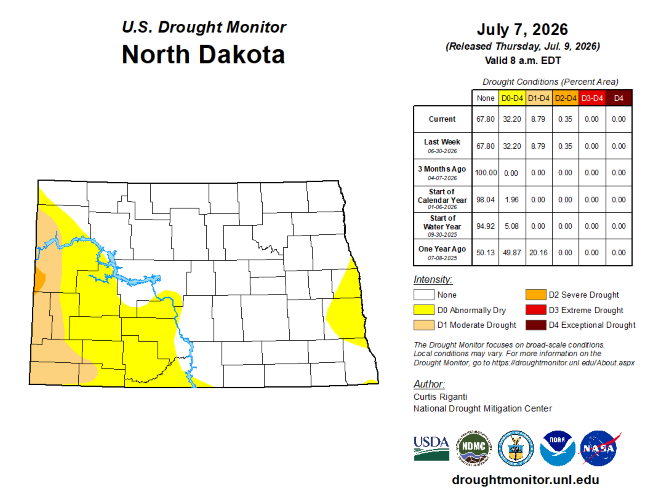
Despite recent rainfall, soil moisture levels vary from adequate to short across the region at a four inch depth.
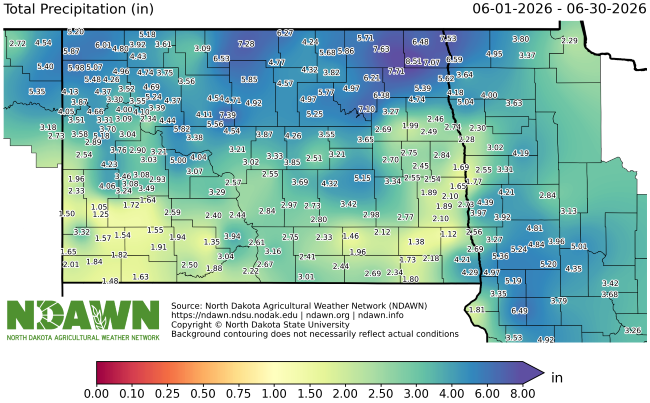
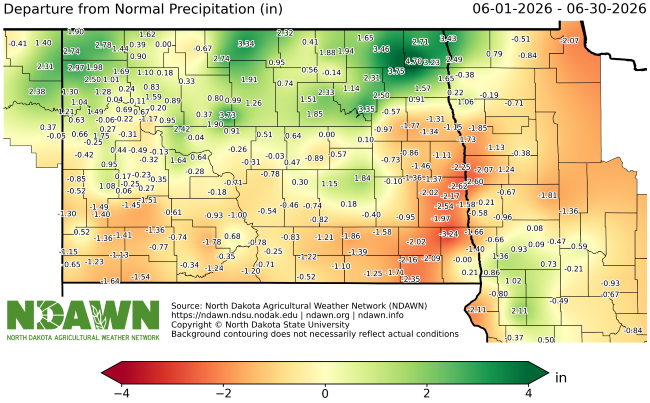
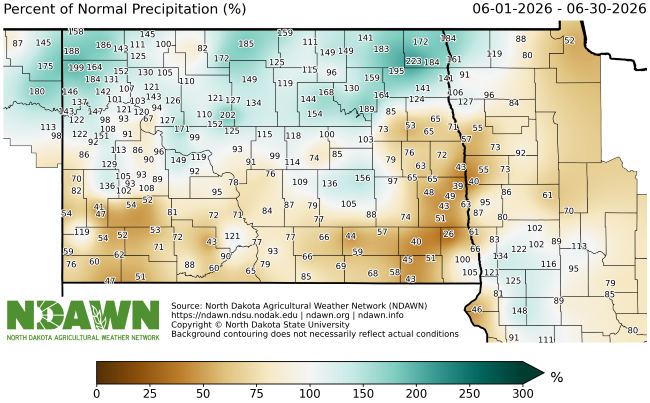
The maps below summarize June rainfall levels including: total precipitation, departure from normal precipitation in inches and the percent of normal precipitation. While we were significantly below normal in April and May, June rainfall helped catch us up to near normal levels in the northwest corner of the state.
The maps below summarize June rainfall levels including: total precipitation, departure from normal precipitation in inches and the percent of normal precipitation. While we were significantly below normal in April and May, June rainfall helped catch us up to near normal levels in the northwest corner of the state.
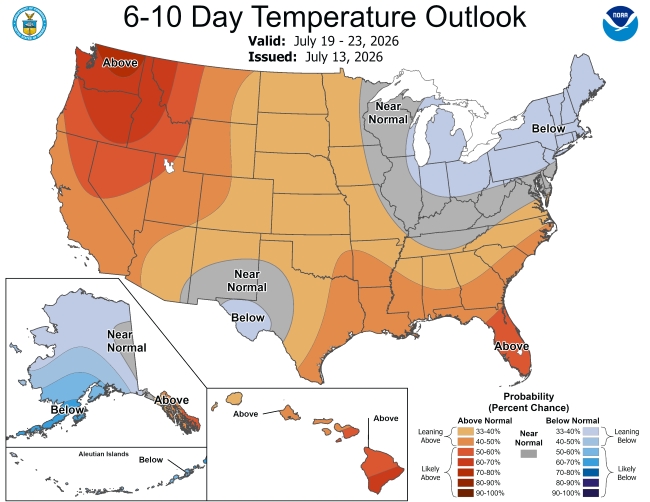
It is no surprise to anyone that temperatures are trending up, and are above normal across the state.
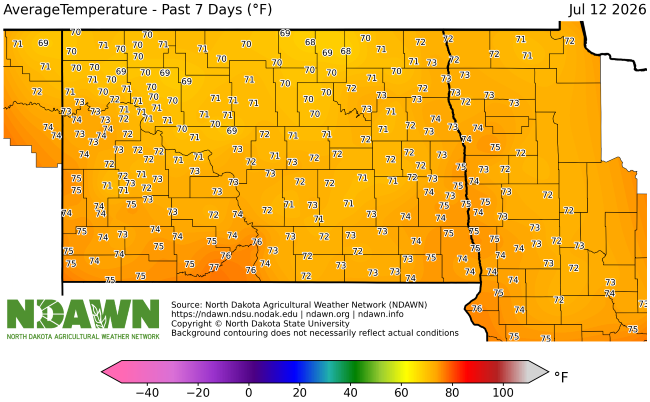
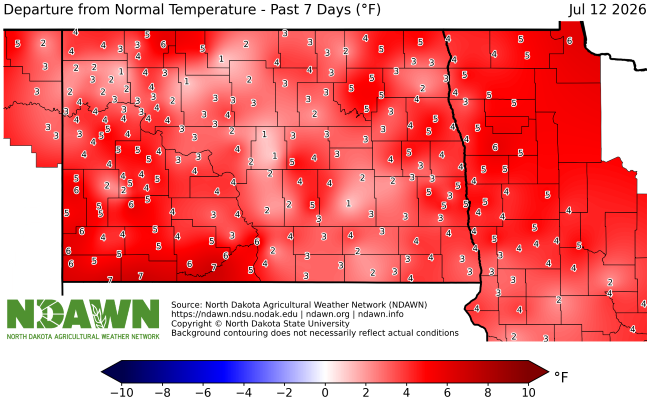
Temperatures on Sunday July 12th reached up to 27 degrees above normal in areas.
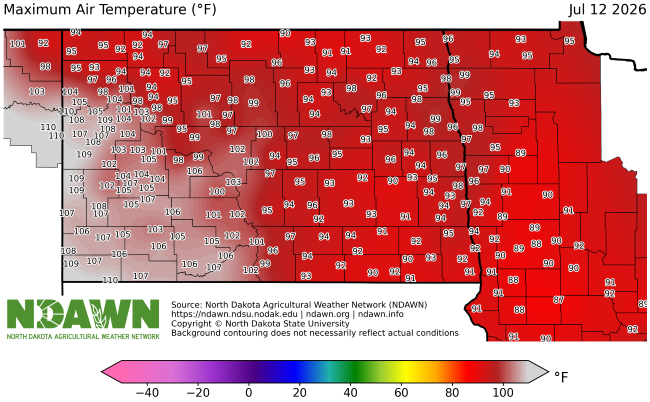
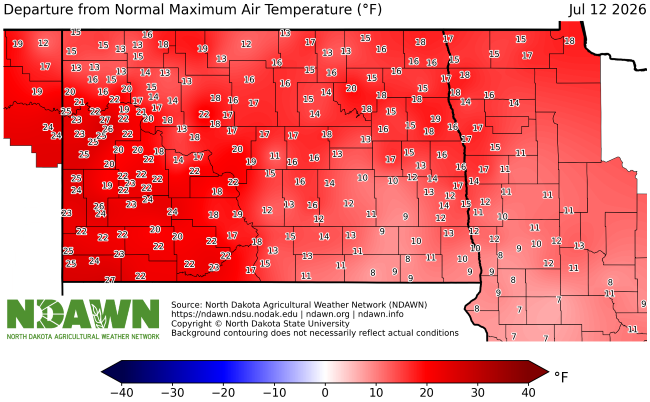
The first two weeks of canola flowering is sensitive to high temperatures (above 80°F), and heat waves can cause yield loss due to flower abortion. Observed yield loss from heat stress has been estimated at 10-20%. Cool night temperatures at or below 60°F can help mitigate heat stress from daytime highs. Once in the pod stage canola is less sensitive to heat, but the combination of heat and drought can impact seed development.
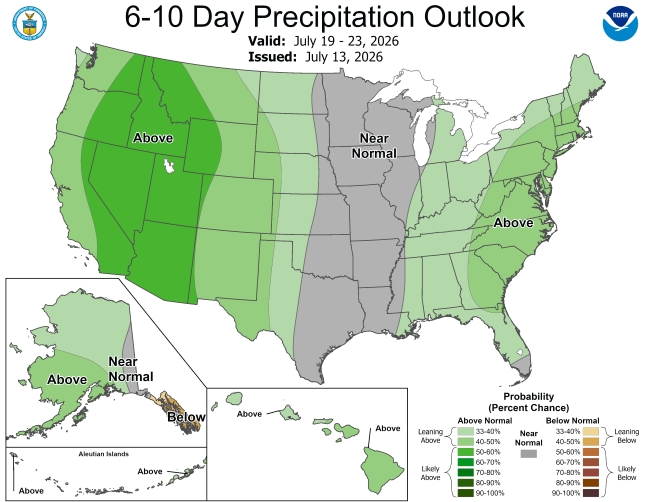
The 6 to 10 day outlook is predicting that warm temperatures will continue, but there is the possibility of rainfall in the forecast. Adequate moisture will help crops withstand warm temperatures.