Agronomy Update
Jul 06, 2026
Fusarium Head Blight (FHB) Risk Update
Predicted FHB risk is dependent on the level of genetic resistance in the wheat or durum variety grown. The last issue of the NDSU Crop and Pest Report contains an article by Dr. Andrew Friskop, NDSU small grains and corn Extension pathologist, providing some guidance on using the resistance ratings in the Hard Red Spring Wheat Variety Selection Guide and the Durum Variety Selection Guide.
- 7 or higher = very susceptible
- 6 = susceptible
- 5 = moderately susceptible
- 4 or lower = moderately resistant
Remember that crop rotation will also play a role in your risk level, with wheat or durum planted onto corn residue being the highest risk scenario, followed by wheat on wheat/barley. Wheat or durum planted onto non-host crop residue (canola, pulse crops, soybeans etc) is the lowest risk.
Very Susceptible Varieties
FHB risk for very susceptible wheat and durum varieties remains high across North Dakota and much of Montana according to the national model. In the NDSU model the high risk area for very susceptible varieties is in the northern tier of the NW corner of the state, with moderate risk in the southern half of Williams County. The risk is driven by high relative humidity.Very susceptible varieties of HRSW include Dagmar, MT Carlson, PFS Muffins, PFS Rolls, TCG-Badlands, TCG-Wildcat and WB9590.
Very susceptible varieties of durum include Maier, Mountrail, and Strongfield.
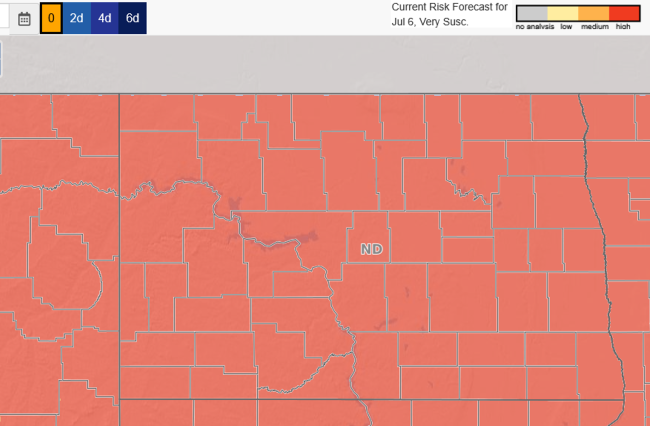
National model risk prediction for very susceptible durum and wheat varieties. Red = High.
Very susceptible varieties of durum include Maier, Mountrail, and Strongfield.
National model risk prediction for very susceptible durum and wheat varieties. Red = High.
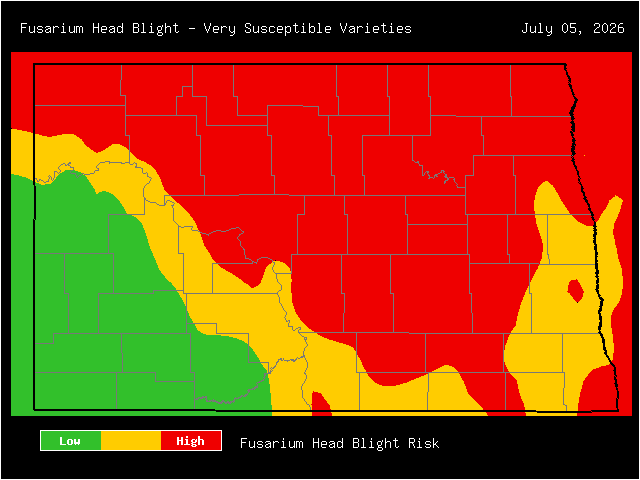
NDSU model risk prediction for very susceptible durum and wheat varieties.
Susceptible Varieties
The national and NDSU models align more closely for susceptible varieties of durum and spring wheat, although the national model again predicts a higher level of risk compared to the NDSU model.Susceptible varieties of HRSW include AP Smith, Brawn-SD, Enhance -SD, CP3678, and ND Roughrider among many others.
Susceptible varieties of durum include ND Grano, MT Blackbeard, and Alkabo.
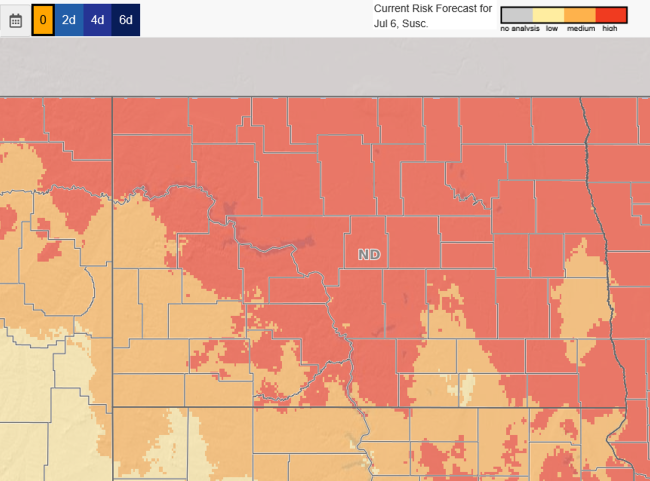
National model risk prediction for susceptible durum and wheat varieties. Red = high, orange = medium, tan = low.
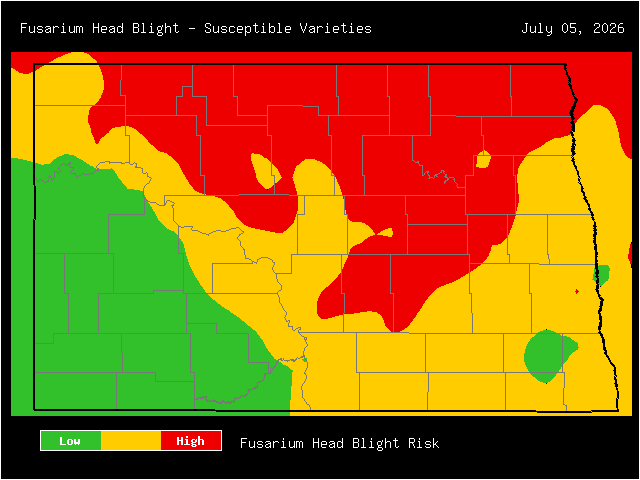
NDSU model risk prediction for susceptible durum and wheat varieties.
Moderately Susceptible Varieties
Predicted risk varies from moderate to low for moderately susceptible varieties in both risk models.Moderately susceptible varieties of HRSW include ND Horizon, ND Stampede, ND Frohberg, SY Ingmar, SY Valda, AP Iconic and others.
Moderately susceptible varieties of durum include Carpio, Divide, Joppa, ND Riveland, and ND Stanley.
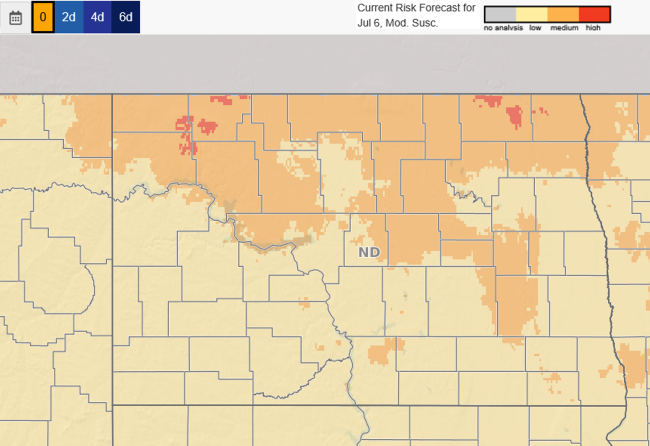
National model risk prediction for moderately susceptible durum and wheat varieties. Red = high, orange = medium, tan = low.
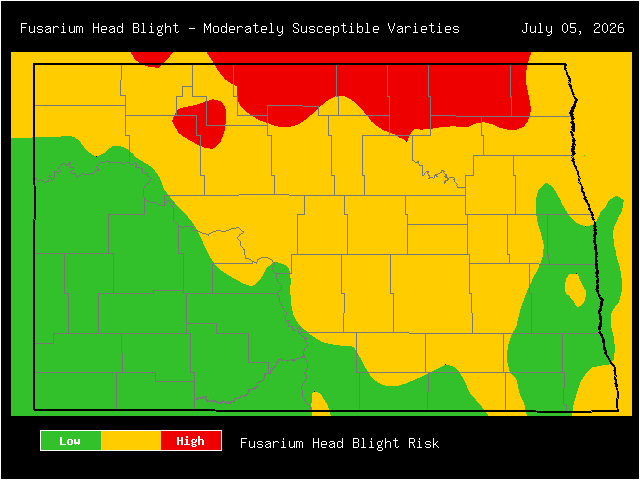
NDSU model risk prediction for moderately susceptible durum and wheat varieties.
These models help us determine risk for FHB infection at the time of fungicide application. After the pathogen infects, it can continue to grow and spread in the wheat head. That is why we see higher levels of vomitoxin in the harvested grain when conditions remain humid and damp during grain development.
When making a spray decision remember to take into consideration other factors like crop rotation, yield potential and foliar disease risk. Until today, conditions have been conducive to tan spot infection.
Based on the NDAWN growing degree day app, fields planted after May 10th have not yet started to flower (see table below). If you need help staging fields for fungicide applications, reach out to our agronomy team and we can get you on the schedule.
If you have any other questions please feel free to reach out.
Dr. Audrey Kalil, CCA
Agronomist/Outreach Coordinator