Agronomy Update
2026 Horizon Resources Agronomy Interns
We are excited to continue the third year of our internship program in 2026. This summer we will be welcoming back Shaun Branham to our Williston location and Kylee Janz has joined us at the Fairview location. Learn more about our summer interns below.
Shaun Branham

I am excited to return this summer for another agronomy internship! I learned a lot last year, and am looking forward to building on that experience. This spring I am graduating from North Dakota State College of Science with my Associates Degree in Precision Agronomy. In the Fall, I will attend NDSU to pursue a Bachelors Degree in Agricultural Economics.
I look forward to seeing everyone again, and working with the Horizon Resources agronomy team this season.
Kylee Janz

I grew up in the Bottineau, North Dakota area and currently live in Alexander, ND. I am a senior at North Dakota State University in Fargo, majoring in Business Administration with a minor in Agricultural Business. Prior to my internship, I worked as a substitute teacher in Alexander.
I am excited to learn how to scout fields this summer, and work with the agronomy team. I look forward to helping customers while gaining hands-on experience in the field.
Planting Canola: Best Practices to Maximize Yield
While variety selection is an important factor driving canola yield, even the best genetics can only reach their full potential in the right environment. While we can't control the weather, planting decisions can play a role in mitigating yield loss due to dry conditions.
Seeding Depth
With a small seed size, canola lacks the force and the energy to push to the surface if planted too deeply. Conversely, overly shallow seeding risks uneven germination or seedling death due to lack of moisture. The Canola Council of Canada recommends a seeding depth of 0.5 to 1 inches in moist conditions, while BASF suggests planting slightly deeper from 0.75 to 1.25 inches. Canola can be seeded down to 1.5 inches if necessary to reach moisture, and this could be beneficial if the top inch or so is dry. The graph below shows that in dry years, there was no difference in stand count between a seeding depth of 0.5 inches (1 cm) and 1.5 inches (4 cm).
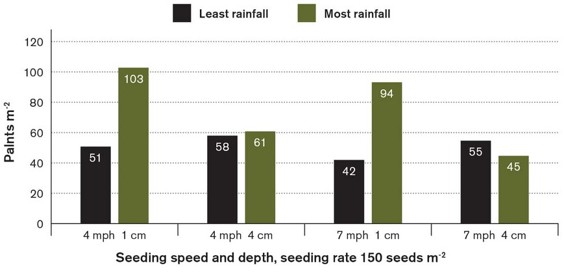
Seeding below 1.25 inches could result in higher than expected stand and yield loss (graph below), so if you need to plant deeper to reach moisture consider increasing your seeding rate to maintain the plant population within the appropriate range.

Seeding Rate
The recommended plant density for canola is 5 to 8 plants per square foot, or 5 to 7 plants per square foot for InVigor hybrids. Estimates are that roughly 60% of canola seeds planted successfully germinate and become seedlings, although this will change by environment and field conditions. Thus, you need to plant 10 seeds per square foot or more to achieve the ideal stand count.In the study described above (Harker et. al. 2012), they planted at a rate of 150 seeds per square meter which is approximately 14 seeds per square foot. Despite the significant impact of seeding depth on plant population, there was no impact on yield. This is likely because they were still close to the minimum plant density of 5 plants per square foot.
Research conducted at the NDSU Dickinson Research Extension Center in 1999 and 2000 evaluated the impact of seeding rate on canola. They found that seeding rate had a significant impact on stand count, weed density and yield (Table below). They concluded that seeding rates of 10 to 15 seeds per square foot resulted in optimum economic return.

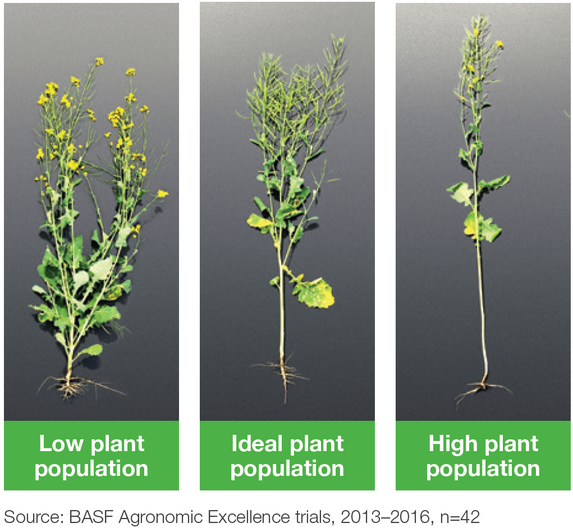
Seeding rate also impacts plant architecture and maturity with drawbacks to both low and overly high plant populations:
- Low plant population: more branching, woody stems and delayed maturity.
- High plant population: reduced branching, weaker stems and earlier maturity.
Seeding Date
Seeding date not only impacts the environment experienced by plants at emergence, but also when they are flowering. Most canola growers are well aware of the yield losses which can occur if hot temperatures (> 85°F) cause flower abortion. While it depends on the year, canola planted in early May will likely be almost done flowering before the hottest days of summer. In hot and dry years, early playing may significantly improve yields while years with mild late summer temperatures and adequate rainfall may be more forgiving of late planting.
Research Agronomist John Rickertsen has been conducting canola planting date studies for the past three years at the NDSU Hettinger Research Extension Center. Results varied by year due to environmental conditions. In 2023 and 2025, there was sufficient rainfall and conducive temperatures, while 2024 was hot and dry. In 2024, yield was reduced when planting after May 2nd, while in 2023 only the last planting date on May 31st had reduced yield. In 2025, yield was similar across dates.
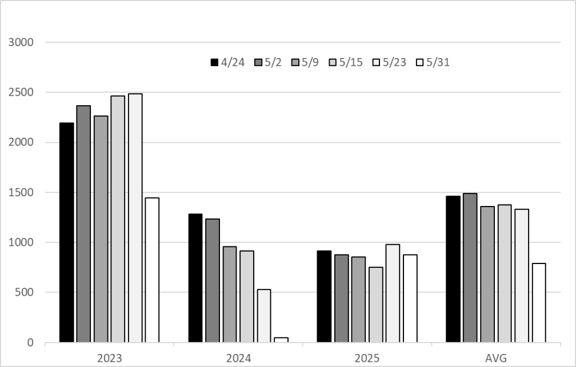
Figure 2. Canola yield by planting date 2023 - 2025; Hettinger, ND. J. Rickertsen, NDSU.
Canola can germinate in soils as cold as 33°F, although the crop will grow slowly and is at greater risk of early season flea beetle feeding. While 50°F is considered ideal to ensure quick emergence, canola is frequently seeded before then. A working threshold for seeding canola is when the three-day average soil temperature in the seed zone is 40°F and temperatures are warming.
Canola planted and emerging in cool temperatures are cold hardened and can better tolerate frost. The worst scenario is when canola experiences a drop to the mid 30s overnight after several warm days. The plants lose cold hardiness during the warm weather and the sudden cold temperatures can bring significant losses. Increasing seeding rates by 0.5 lb/A can help offset plants lost to frost.
Pre-Plant Weed Control
Strong plant establishment doesn't just maximize yield, it also limits weed growth. With weeds like multiple herbicide resistant kochia, we can't afford to put Liberty at risk by using it in a burn down program. A common tank mix ahead of canola is glyphosate plus Aim (Group 14). With 40-50% of kochia plants tested coming back as Group 14 resistant and most of them as glyphosate resistant, you may want to consider a new strategy. Alternatives include a fall application of Sonalan (Group 3) or paraquat in the spring.
When applying paraquat in a burn down scenario make sure to keep the water rates up; 15-20 gal/A is still necessary to get the coverage required for a contact only product. Air temperatures must be above 60°F and ideally closer to 65°F on average. Higher use rates are allowed in a burn down application, and larger weeds or denser weed populations may require a higher rate.
Adequate rainfall and mild temperatures can mask a lot of mistakes in grain production and canola is no exception. In dry years, it is even more critical to get a good start to the growing season. While it can be tempting to cut corners, particularly with seeding rates, sound agronomic practices are essential to overall success.
Dr. Audrey Kalil, CCA
Agronomist/Outreach Coordinator
Choose the Right Adjuvants to Maximize Herbicide Performance
An effective weed control program can add a lot more to the bottom line than you might think. First and foremost, weeds are direct competitors with our crops for water, nutrients, light, and space. They also harbor pests and diseases that are detrimental to crops. Ultimately, management decisions always come down to yield and weeds significantly reduce crop yields. For example, just one wild oat plant per square foot can reduce wheat yield by 7-8% or around 3 bu./A on a 40 bu./A yield (NDSU, 1979). In this same study less than one field bindweed or Canada thistle plant per square foot reduced wheat yield by 17-18%. Yield losses of up to 68% have been documented in soybean from kochia competition (Geddes and Sharpe, 2022).
Now that we’ve seen how impactful weeds can be to our bottom line, what steps can be taken to maximize control? The key is to follow herbicide stewardship practices:
- Correct product, rate, and water volume
- Right timing for weed size and growth stage
- Appropriate driving speed and nozzles
- Environmental conditions conducive to herbicide uptake
- Adjuvant selection
We don’t always have the time or conditions to execute a “perfect” application. Weather rarely cooperates, and dialing in every variable like droplet size or nozzle.
Selection can be challenging. That’s where adjuvants become a valuable tool. They help stabilize and enhance herbicide performance across less-than-ideal conditions.
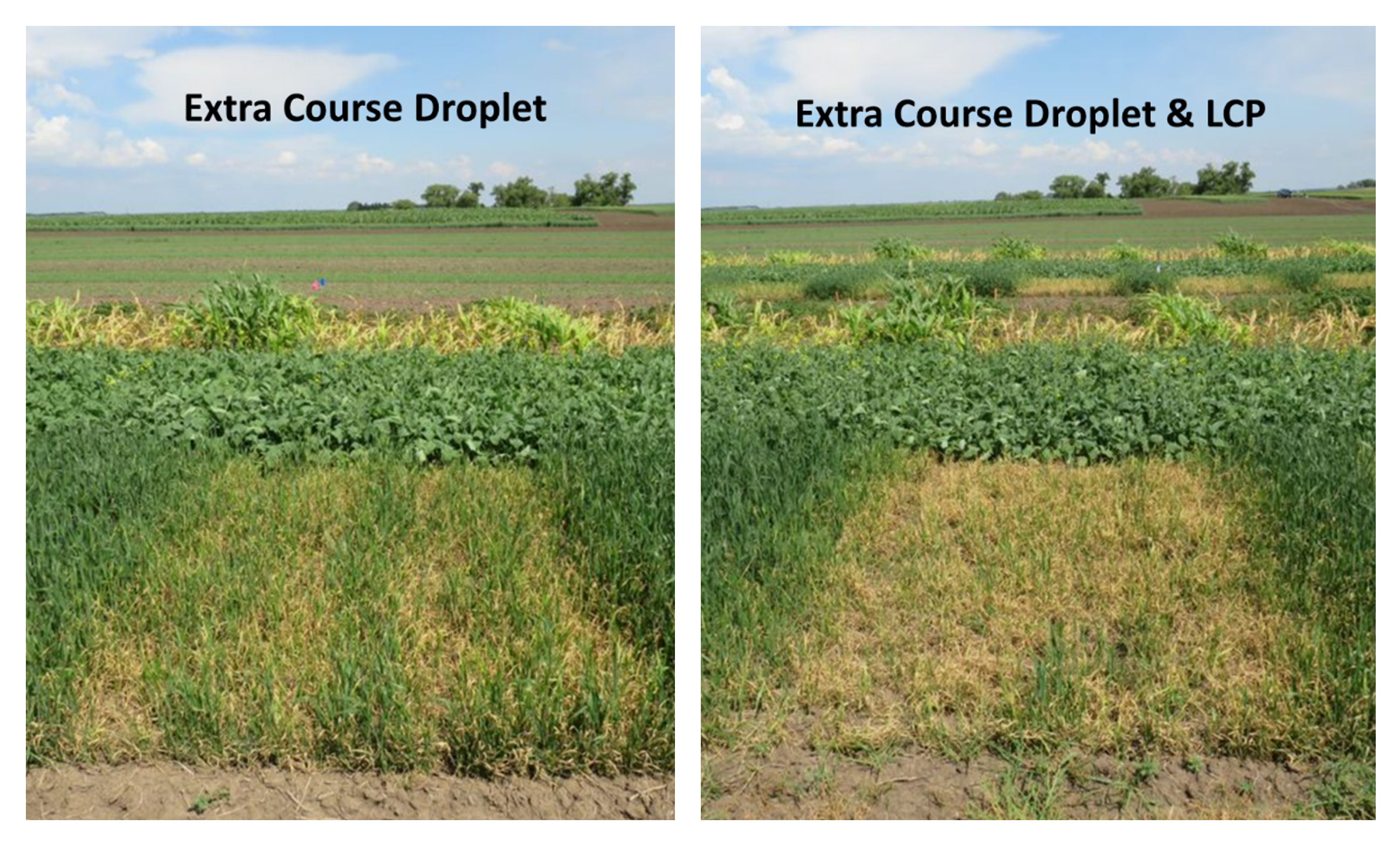
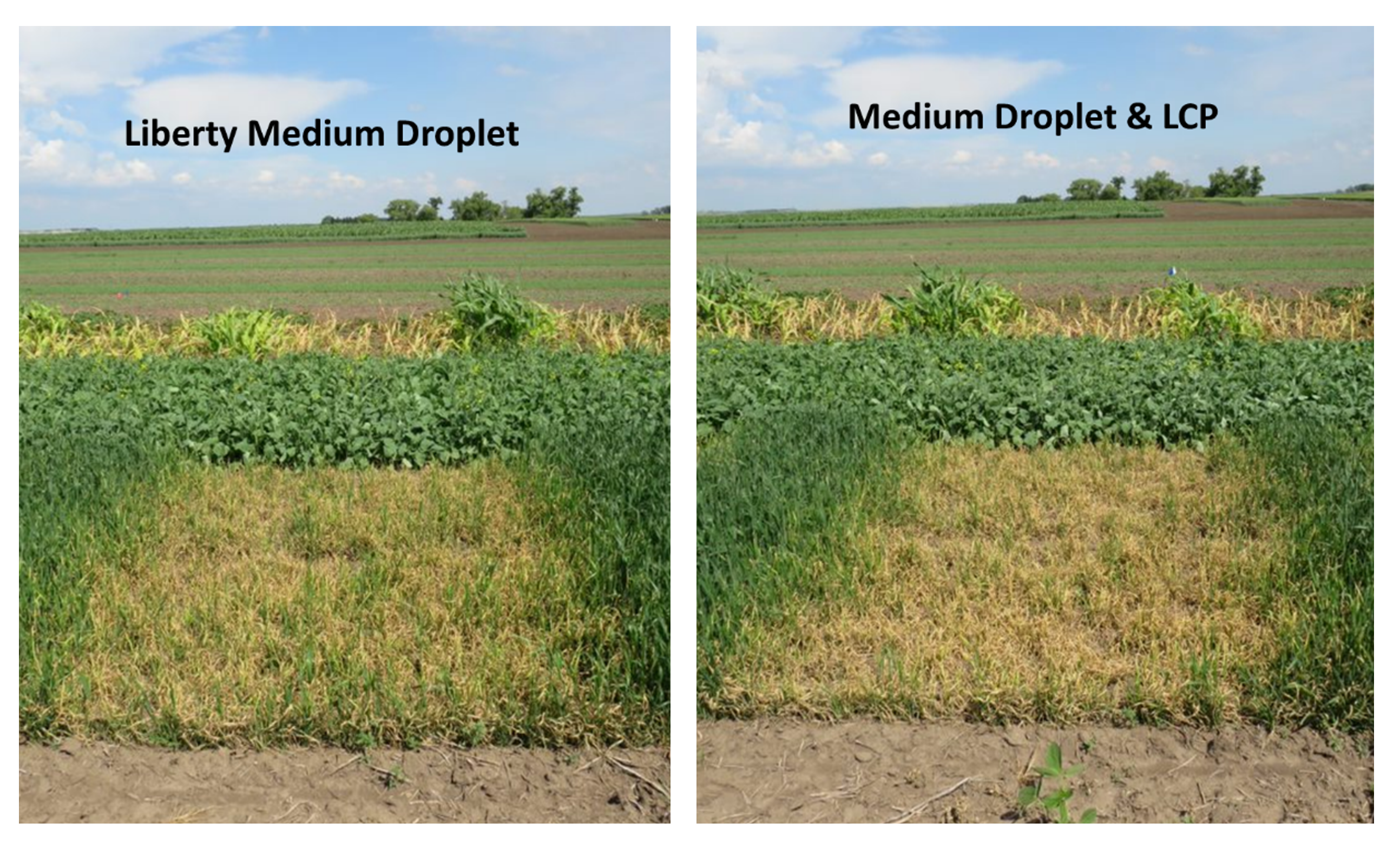
The pictures below highlight how the addition of Last Chance Pro (Non-ionic Surfactant + Water Conditioner) stabilizes Liberty performance across droplet sizes.
Do Adjuvants Really Make That Big of a Difference?
Just like everything in agriculture the answer is it depends. Weed control by some chemistries like Liberty, glyphosate, Sharpen & paraquat are greatly influenced by adjuvants, while others aren’t as affected. It also depends on the environment. When plants are actively growing, they are taking in as many resources as possible and allocating them to the growing points. When we have a more difficult environment, like hot and dry conditions, weeds tend to harden off and can even become dormant. This is where adjuvants can make a noticeable difference. They not only help spray droplets reach the target, but also improve penetration into the plant essentially helping the herbicide “kick down the door” and get inside.
Paraquat is applied as a desiccant during hot and dry conditions. In the pictures below, you can see how the addition of an NIS improves performance.

How Adjuvants Work
Most adjuvants fall into four main categories:
Non-Ionic Surfactants (NIS)
Surfactants reduce surface tension, allowing spray droplets to spread out instead of bead up. Water naturally wants to stick to itself, forming round droplets. This limits coverage, especially with contact herbicides like paraquat or Liberty, where coverage is critical. By adding a surfactant, droplets spread across the leaf surface, increasing coverage, and improving herbicide performance.
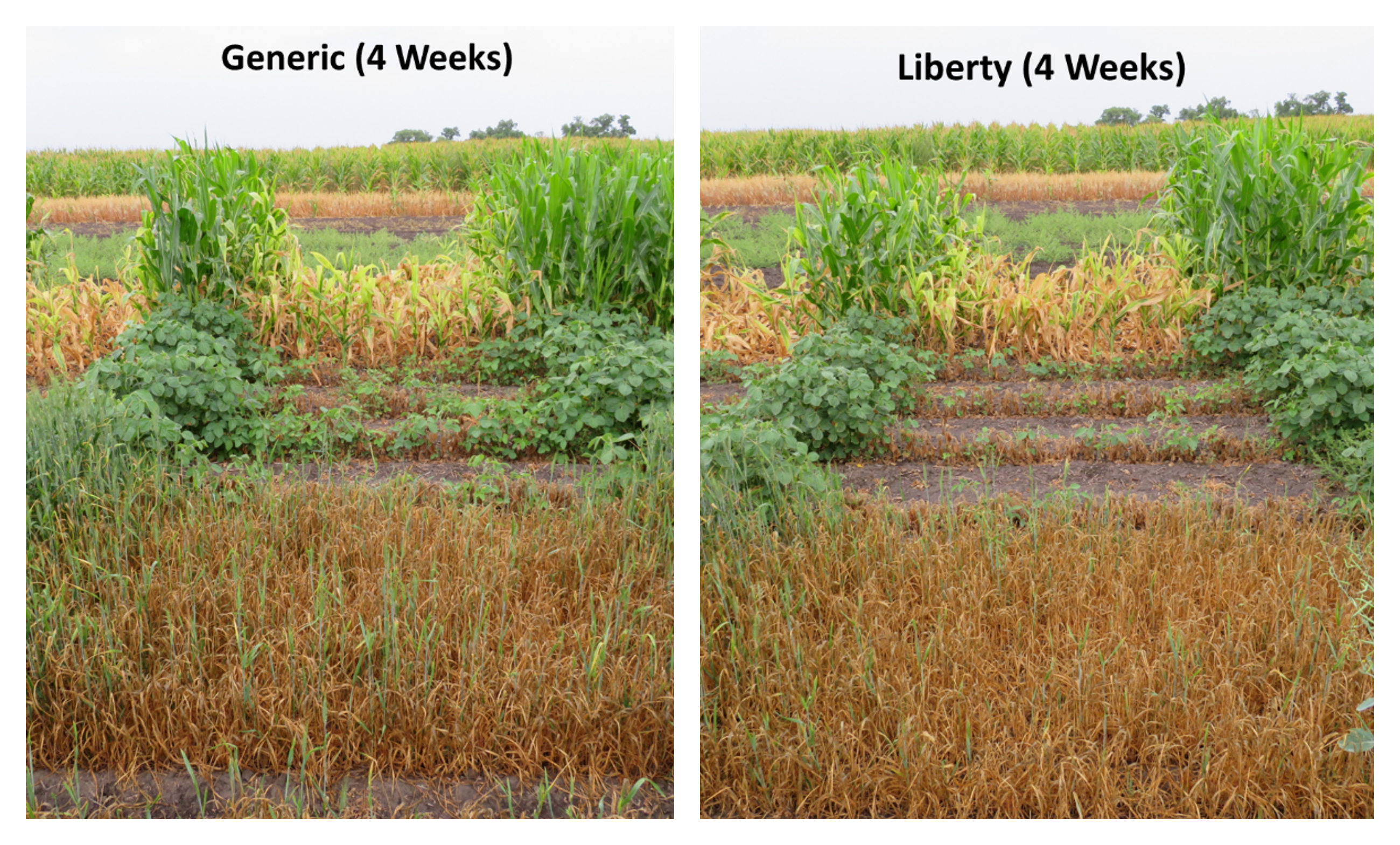
This can make a significant difference in pesticide performance and is why many companies will prepackage adjuvants like surfactants in the bottle with their herbicides. Name brand Liberty or glyphosate are good examples of this practice. The pictures below demonstrate the difference between generic and name brand Liberty products with and without an NIS.

Oils (Crop Oil Concentrates & Methylated Seed Oils)
Oil-based adjuvants improve herbicide absorption by softening or dissolving the waxy outer tissue on leaves, which is one of the primary barriers for foliar uptake. They are especially critical for lipophilic (oil-soluble) herbicides and help
keep the herbicide in solution on the leaf surface. Examples of these would be our ACCase grass herbicides (clethodim) & various PPO and photosystem inhibitors (like sharpen & bromoxynil)
Common types include:
- Crop Oil Concentrates (COC)
- Methylated Seed Oils (MSO)
- High Surfactant Oil Concentrates (HSOC) which can be COC or MSO based

Water Conditioners
Water conditioners address issues tied to spray water quality. Hard water contains minerals like calcium and magnesium that can tie up herbicides such as glyphosate, reducing effectiveness. Water conditioners like ammonium sulfate (AMS) bind these ions, preventing our hard water from forming salts with the herbicides that render them ineffective. Remember, plants drink they don’t chew, so we need to keep our pesticides in solution for them to work.
They can also help adjust pH (basic blends), improving herbicide stability and performance. Keeping the tank mix solution at the correct pH is critical for group 2 herbicides, particularly SU’s and IMI’s, frequently used in our wheat herbicide tank mixes. These chemistries salt out of solution at lower pHs. Basic blend adjuvants keep the pH of your tank mix high enough for these herbicides to stay in solution.
Drift Control Agents (DRAs)
Drift control agents modify droplet size and reduce the formation of fine droplets that are prone to off-target movement.
These adjuvants help:
- Improve on-target deposition
- Reduce volatility and drift
- Enhance application safety
While they may slightly reduce coverage due to larger droplet size, they play a critical role in maintaining stewardship and minimizing off-target damage. These products will be needed when using dicamba over the top in dicamba tolerant soybean varieties.
Crop Safety vs. Weed Control
Product labels generally provide options on which adjuvants and how much to
use. Sometimes the decision comes down to cost or convenience, but other times it can be a question of crop safety. It’s hard to know how much control we lose when choosing to reduce rates of AMS or by selecting an NIS or COC over an MSO, but the crop injury we induce can be very apparent. This can make our adjuvant selection a difficult decision, and the right answer is most likely field specific. If we have a relatively clean field maybe we go the crop safety route, but if we have a weedy mess its most likely advantageous to be aggressive. Failing to control weeds doesn’t just impact your crop this season; weeds which are allowed to set seed cause problems for years. Plus, herbicide resistance can make it even more of challenge to get fields cleaned up once weeds get out of control.
Choose the Right Adjuvant for the Job
Adjuvants are not a silver bullet but they are one of the most flexible tools we have to improve herbicide performance. When conditions are ideal, their impact may be less noticeable. But when conditions are challenging, as they often are, they can be the difference between a good application and a great one. Long term that can make a big difference in the amount of weed pressure you face every year.
Understanding which type of adjuvant to use, and when to use it, allows applicators to better manage variability in weather, water quality, and weed pressure, ultimately protecting both crop safety and yield potential.
Codee Lee
Technical Specialist
CHS
Liberty Ultra: Better Performance Onto & Into the Leaf
As growers across North Dakota prepare for another season under intensifying weed pressure, Liberty® ULTRA herbicide is playing an increasingly central role in post-emergence weed control programs for canola and soybeans. Powered by BASF’s Glu‑L™ technology, Liberty ULTRA represents the next generation of glufosinate herbicides, offering improved uptake, coverage, and consistency compared with older formulations. We at BASF emphasize that performance and long‑term sustainability depend on following best‑practice application guidelines and resistance‑management principles.
Start Clean and Stay Clean
Successful Liberty ULTRA programs begin before the sprayer ever enters the field. University extension specialists consistently recommend a “start clean” approach using tillage or an effective burndown herbicide prior to planting to ensure crops emerge into weed‑free conditions. Because Liberty ULTRA is a contact herbicide with no residual activity, it only controls emerged weeds. Residual pre‑emergence herbicides layered into the program help protect yield and reduce early‑season competition, especially when weather delays timely post application.
Target Small, Actively Growing Weeds
One of the most critical best practices is timing Liberty ULTRA applications when weeds are small, ideally 1 to 3 inches tall, and growing actively. Research across multiple states shows that control declines rapidly once weeds exceed 4 inches, even at higher labeled rates. Early applications improve efficacy, reduce the need for resprays, and help minimize selection pressure for resistance.
Environmental conditions also matter. Glufosinate performance is optimized under warm temperatures (generally above 60°F), bright sunlight, and moderate to high humidity. Extension scientists note that early‑morning applications can be advantageous in dry climates due to higher humidity, while spraying close to sunset may reduce control on certain species such as Kochia and common lambsquarters.
Use the Right Rate and Follow the Label
Liberty ULTRA carries updated use rates under a supplemental label approved in late 2025, now providing growers with additional flexibility. Current single‑application maximum rates are up to 34 fl oz/A in soybeans and 23 fl oz/A in canola, with higher cumulative seasonal limits than previous seasons. Even so, experts stress that applications should never be made below labeled rates, as under‑dosing accelerates resistance development and often leads to control failures.
Maximize Coverage With Proper Spray Setup
Because Liberty ULTRA acts through direct contact, spray coverage is paramount. I recommend a minimum of 15 gallons per acre of carrier volume, with 20 GPA preferred in dense canopies. Medium‑sized droplets offer the best balance between canopy penetration and drift control; coarse or ultra‑coarse droplets may compromise coverage, while fine droplets raise drift risks.
Ammonium sulfate (AMS) is another key component of successful applications, usually at 3 pounds per acre depending on tank mixes. Why AMS? AMS overwhelms cells with ammonia leading to better weed control and conditions water to prevent tie up of glufosinate with antagonistic cations found in hard water. It also creates pH gradient across the cell membrane to aid in herbicide absorption into weeds. Appropriate nozzle selection, boom height management, and ground speeds below 15 mph further improve spray deposition on target weeds.
Stewardship Is Essential for Long‑Term Success
With confirmed cases of glufosinate resistance emerging in waterhemp populations, stewardship has become a central theme in Liberty ULTRA recommendations. Weed scientists urge growers to avoid relying solely on glufosinate year after year, particularly in tight crop rotations dominated by canola and soybeans. Diversifying herbicide modes of action, rotating crops, and increasing crop competition through practices like narrow row spacing all contribute to preserving Liberty ULTRA’s effectiveness.
Looking Ahead
Liberty ULTRA has quickly established itself as a powerful tool against tough, glyphosate‑resistant weeds in canola and soybeans. When used according to label directions and integrated into a diversified weed management program, it delivers fast, reliable control. But as experts caution, the product’s long‑term value hinges on disciplined application, sound agronomy, and proactive resistance management because in today’s weed control landscape, no single tool can stand alone.
Chris Binstock
Business Rep, Western ND BASF
Soybean Weed Control Starts Before You Spray
Today's soybean marketplace runs the full spectrum, from conventional beans headed into specialty food markets to multi-way herbicide-stacked traits. We've moved toward those stacks because the Roundup Ready trait alone simply isn't enough anymore. Dicamba, 2,4-D, and glufosinate (Liberty) are now necessary tools to maintain weed-free stands in our current landscape, which is why most acres around here have shifted to Enlist or Roundup Ready Xtend Flex.
Each system has its strengths and weaknesses. Given our heavy kochia pressure, the Xtend system looks like the obvious pick and I'd agree, except that label compliance has gotten exhaustive.
Xtend Flex vs. Enlist: Label Restrictions at a Glance

If you're planning to use dicamba post-emergent, get familiar with the Xtend requirements. Not just because the label is the law, but because stewarding this technology matters; it's an effective kochia killer that we need in our soybean systems. The Enlist trait, by contrast, is far less restrictive. Outside of using an approved 2,4-D product (Enlist One or Enlist Duo) and the endangered-species buffer in certain counties, you're largely free of the extra hoops.
The Liberty-Only Temptation
All of this scares folks off, and some might be tempted to skip the growth regulators entirely and run only glyphosate and glufosinate, since neither carries the same baggage.
Liberty in a post pass starts with a very satisfying feeling. Activity shows up fast and the death-to-weeds feeling is immediate. Fast forward 10 to 14 days, though, and the holes start to show. Liberty is a contact herbicide with no soil residual. It needs to coat most of each leaf and growing point to kill the plant, which only happens when weed density is thin, coverage is good, and the weather cooperates.
Ideal Liberty conditions: 75°F, high humidity, sunny. Overcast days, cool weather, and dry humidity all hurt performance.
On top of that, soybeans are slow to canopy. The rows don't close fast enough to shade out partially controlled escapes unlike a glufosinate-tolerant crop like canola, which grows aggressively and shades weeds shortly after application. It's not a fair comparison; they're two different animals
Why a Pre-Emergent Is Non-Negotiable
To steward Liberty and get the most out of every application in soybeans, you have to keep weeds at bay at all times. Don't let them get big or thick on you, or performance falls apart. That means building a foundation.
The good news is we have multiple pre-emergent residual options. The goal is to keep weeds like kochia small and at low density later into the season, so when Liberty goes down, we can actually coat what's still standing and finish the job.
Pre-Emergent Options for Soybeans
Sulfentrazone (Authority, Spartan), Group 14
Strong on kochia. Soybeans are far less sensitive than peas or sunflowers. Group 14 resistance is showing up in our region — keep using it, but tank-mix.
Pyroxasulfone (Zidua), Group 15
Zidua can provide solid kochia control on its own and sharpens up sulfentrazone. Authority Supreme is a popular pre-mix.
Metribuzin (generic; formerly Sencor), Group 5
There are too many products on the market to cover them all, but the decision to add any PRE is the real step forward. This isn't a spray-and-pray situation where multiple in-crop Liberty passes do the work. It's calculated layering: residuals knock the target weeds back and suppress regrowth to the point that Liberty can come in and make scorched earth, leaving just the beans behind to flourish.
Bottom Line
As you head into planting these next few weeks, keep in mind that adding a PRE is the difference between beans that start clean and stay clean, versus the surprise kochia peeking above the canopy in August reminding you they won, and that they'll be back next year.
Kyle Okke, CCA
Agile Agronomy LLC
Agronomists Happy Hour Podcast