Agronomy Update
Dec 01, 2025
Grower Finance Programs
We are now offering a new Grower Finance Program through CHS Capital called Accolade. This program will give our customers another option for financing all their Ag inputs including crop protection products, seed, fertilizer and fuel, and still be able to participate in the lower finance rates from manufacturers with rates as low as 0%.BASF will offer 0% on both crop protection products and Invigor seed. We have several crop protection manufacturers that will be at 1.9% while fertilizer, fuel and even custom application can be financed at about prime plus 1.5%. Most products purchased from Horizon Resources will fall into one category or another and will be able to be financed with the Accolade Grower Finance Program.
With fertilizer at about 8.5%, this helps all of our customers access end-of-year fertilizer prices in December or January. This past December, growers who bought urea tons in December or January probably paid about $150 per ton less than the urea price in May. This is normally how prices are affected with supply and demand in season. Even after paying interest of 8.5% for 8 months to get you close to harvest timing, you should have saved over $100 per ton versus paying the in-season May price.
To participate you fill out an easy one-page application for up to $750,000. Higher amounts will be available with additional information and documentation. Once we have your loan approval, we will allocate funds into the different loan products including BASF products, Corteva products, fertilizer products, etc. As you purchase products, funds will be requested by category and paid on your account. Loan maturity date will be February 10, 2027.
John Salvevold, CCA
Agronomy Division Manager
Considerations for Canola Hybrid Selection
Early-order deadlines are coming up, which means many of you will soon decide which hybrids to plant in 2026. If you’re still weighing options, below are some things to consider along with resources to compare hybrid performance.Herbicide Tolerance
With the growing issue of resistant weeds, herbicide trait selection is increasingly important. This is especially true for dryland producers who may rely on canola as their only herbicide-tolerant crop in the rotation.If kochia is your number one weed issue, then you will need to select a Liberty Link hybrid. Most if not all of our kochia populations are now resistant to Round Up (glyphosate).
Wild oat and green foxtail emerge after planting unless seeding is delayed, so our burn down won’t provide control in this situation. If these grassy weeds are your primary issues, then Round Up Ready or TruFlex hybrids will help you get those weeds under control.
Green foxtail and wild oat with resistance to group 1 and/or group 2 herbicides has been detected in North Dakota. With green foxtail we have alternatives like group 15 and group 27 herbicides which we use either as a fall residual (group 15) or in crop (group 27). For wild oat, however, we don’t have any other options to control group 1 and group 2 resistant plants outside of using a Round Up Ready crop. We rely heavily on the group 1 herbicides in our pulse crops and in Liberty Link canola, so giving this mode of action a break could help us extend the lifetime of important herbicides like clethodim in dryland rotations.
Many people struggle with both kochia and grassy weeds, or are unsure of what weed spectrum they are battling. In those fields, you might want to try a hybrid with both Liberty and glyphosate tolerance. While that may come with a higher price tag, we all know how challenging it is to control weeds in pulses. Using the canola year as a way to clean up challenging fields might improve profitability long term.
Shatter Tolerance
This is the number one reason why people grow Invigor hybrids, but other seed companies have been nipping at their heels to produce hybrids with equal shatter tolerance capabilities. The chart below is from BrettYoung describing the shatter tolerance of their line up.Clayton Hove, BrettYoung Account Manager, observed that BY6217TF was almost too shatter tolerant and that growers might have to adjust the combine settings to thresh the seed out of the pods. Most of the other BrettYoung varieties that we offer are between 7 and 8 on the Canola Council shatter rating scale. Invigor hybrid L255PC is at an 8 on the scale for comparison.

In the Croplan line up, CP9978TF and CP7500LL are described as their top shatter resistant hybrids for glyphosate tolerant and Liberty Link categories respectively. Dekalb evaluated the shatter of their varieties in Minot in 2025, and their data show that DK401TL, DK900TF and DK904TF performed similarly to Invigor L340PC.
Canola can also exhibit pod drop, which is a different trait than pod shatter. Pod drop is when the part of the plant that attaches the pod to the stem weakens and breaks. This is caused by environmental conditions. So keep in mind, even if a hybrid has an excellent shatter tolerance score, with the right environmental conditions or hail we can still get yield loss through pod shatter and/or pod drop.
Yield
We have a number of resources you can use to compare yields across hybrids and seed companies. NDSU and MSU both have trial data across multiple locations and years. The past two years have had decent moisture so yields are relatively high at the North Central REC and you might want to explore yield from Hettinger in 2021 or 2022, or Conrad and Havre, Montana in 2023 to see how hybrids perform under water stressed conditions.These data all come with statistics to help you interpret the results. A numerical gap between yields doesn’t automatically mean the hybrids are truly different. Statistical significance is how we decide if a difference between two values for something like yield is likely “real” and could be repeated under similar conditions in the future.
For example, in the 2024 Liberty Link canola trial at Minot, the Least Significant Difference or LSD 10% for yield is 275 lb./ac (highlighted in purple below). That means you need a difference in yield greater than 275 lb/.ac before you can confidently say one hybrid outperformed another at the 90% confidence level. Using an LSD 5% (95% confidence) is more common, and the fact that the researchers reported LSD 10% probably means differences weren’t significant at the 95% level.
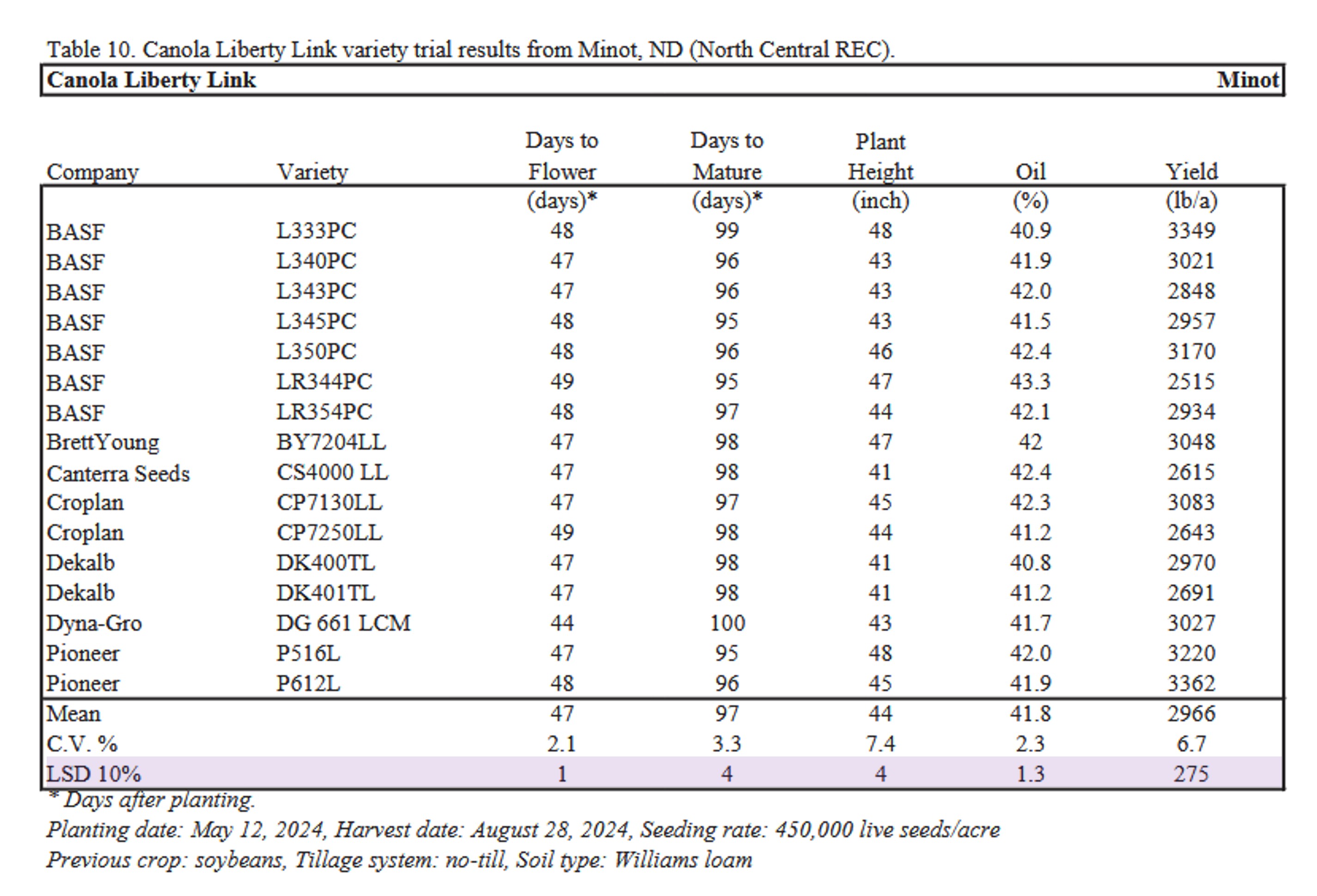
While the data above is certainly helpful, as Kyle stated in a previous newsletter article, be cautious in relying too heavily on results from one year at one location. If you compare the above results to the 2025 Minot Liberty Link canola trial you can see that hybrid rankings shift from year to year.
Overall when I looked at University trial results from across many different locations and years there was a lot of variability in how hybrids performed. The effects of planting date, environment, fertility etc. have a significant impact on how the genetics perform relative to one another. Consider planting more than one hybrid. It spreads risk and reduces the chance you end up with a poor fit for that year’s conditions.
Other Considerations
Maturity: If you’re planting multiple hybrids consider selecting those which differ in maturity. Research on the impact of maturity on yield has found mixed results. In some years the early maturing variety yielded better, but in others the later maturing variety did. Planting multiple maturities may help manage weather risk.Disease resistance: Most hybrids carry blackleg resistance, but the pathogen is genetically diverse, and a hybrid resistant to one race can still be susceptible to another. Because disease tends to show up in high-yield, high-moisture years, choose the best resistance package you can. Growing a hybrid with a single resistance gene repeatedly will select for pathogens which can overcome this mechanism of resistance. Alternatively, hybrids with multiple resistance genes and resistance against multiple races provides you with wider spectrum and more durable resistance.
Management approach: Croplan screens their hybrids for response-to-nitrogen and response-to-seeding rate (see attached document). You can use this data to see if applying top end levels of fertilizer or bumping up the seeding rate is likely to gain you yield. If you want to minimize inputs, then select a hybrid with low response to N.
Selecting a canola hybrid involves weighing agronomic traits and defining your long-term management goals. Planting more than one hybrid can help reduce risk. Even if you already have a favorite, you want to make the traits in that hybrid last as long as possible.
Remember the lessons we have learned with herbicide resistance and recognize that planting the same herbicide or disease resistance trait over and over will eventually lead to resistance. Switch it up to keep weeds and diseases at a disadvantage.
Dr. Audrey Kalil
Agronomist & Outreach Coordinator
2025 Year in Review: Row Crops
As the year winds down and I look back on the 2025 season, I think about the calls, field visits, and conversations I’ve had with every agronomist and farmer I work with. Three crops are my focus of an agronomic story in our region this year: corn, soybeans, and dry edible beans. Each had its own challenges, surprises, and lessons worth sharing.Corn
Corn was truly a roller coaster. For dryland growers, expectations were low early on. We came off a dry fall, had an open winter, and received very little spring moisture. Markets weren’t exactly motivating high-input programs either, so many farms trimmed populations and fertility compared to normal.For irrigated acres, on the other hand, most stuck with their typical fertility strategies, though some farms did tighten those plans with a closer look. Then mid-May arrived. Substantial rains fell across much of the region, especially south and east of the Horizon Resources trade area, followed by several weeks of cooler-than-normal temperatures. The cool stretch slowed corn development from late May into June and even parts of July, but soil moisture was excellent through mid- to late summer. By August, corn yield potential looked as good as I’ve ever seen.
That brings us to September 6th and the frost event that hit from eastern Montana through south-central North Dakota. The severity varied dramatically. Some farms only saw leaf frost above the ear, while others had corn frozen solid to the ground.
That variability showed up at harvest. I know farms that cut their best corn ever and their worst corn ever in the same township.
A few trends became clear:
- Growth stage at time of frost mattered most. Early-dent cornsuffered historically poor yields, while fully dented corn sawminimal impact.
- The differences came from planting date, maturity selection, andaccumulated GDDs.
- When planting dates were tight (within ~5 days), maturity choicedrove the outcome.
And the biggest takeaway? Don’t over-interpret this year. This frost came earlier than normal, and if we’d had even 10 to14 more frost-free days, we would have been talking about record corn yields across the region.
Soybeans
Soybeans had a steadier storyline. One trend I continue to see is how well soybeans tolerate cold soils compared to corn. Many of the farms I work with now plant soybeans first and wait to plant corn until soil temps consistently hold above 50°F. That strategy paid off again this year.The cold, wet stretch in late May and early June had very little negative effect on soybean growth. Then the late-July and August rains created ideal soybean weather, and yields reflected that.
Where we saw struggles was with later-maturity beans on the farms I work with. Those varieties only performed “average,” while earlier maturities did exceptionally well. The reason? Late beans carried big top clusters of pods that had not reached full seed fill before the September 6th frost. That single frost event likely removed 20% of the yield from those later maturities.
Soybean takeaway:
It always pays to plant a spread of varieties and maturities. That strategy protects you whether:
- the season turns dry
- late rains come
- or an early frost clips the finish
Dry Edible Beans
Dry beans generated the most call volume from farms along the Yellowstone River, especially from late July into August. Two diseases dominated the conversation: White Mold and Bacterial Brown Spot.White Mold
There is a tremendous amount of good research available on white mold, especially from Dr. Michael Wunsch, and I highly recommend growers spend time reviewing his work.
But to summarize it concisely:
- If you see white mold, you’re already too late. There is nothing youcan spray to cure it.
- White mold must be prevented, not treated.
- Applying a fungicide after symptoms appear only offers a falsesense of action.
Bacterial Brown Spot
This disease showed up from Miles City all the way to Williston. Humid late-summer conditions, especially when paired with frequent irrigation, made it a problem across many irrigated pinto fields.
Because this is a bacterial disease:
- Fungicides do not prevent or stop it.
- Hydrogen peroxide–based treatments were discussed, but I didn’thear any success stories, and research so far doesn’t supportmeaningful economic suppression.
The key to managing bacterial diseases is reducing canopy humidity. As I like to joke, pinto beans are called dry edible beans for a reason - they like it dry.
Ways to reduce humidity:
- Planting wider rows (30" dries much faster than 20")
- Using larger, less frequent irrigation events rather than daily lightapplications
- Avoiding irrigation patterns that keep the canopy constantly damp
Dry bean takeaway: everything boils down to water management. Small, frequent irrigation → More bacterial disease pressure Large, spaced-out irrigation → Less bacterial pressure
In a humid year, you’ll battle one or the other and sometimes both. But at least with white mold, we have preventative tools. If conditions favor white mold, make timely preventative fungicide applications part of your plan
Kyle Okke, CCA
Agile Agronomy LLC and Agronomists Happy Hour Podcast
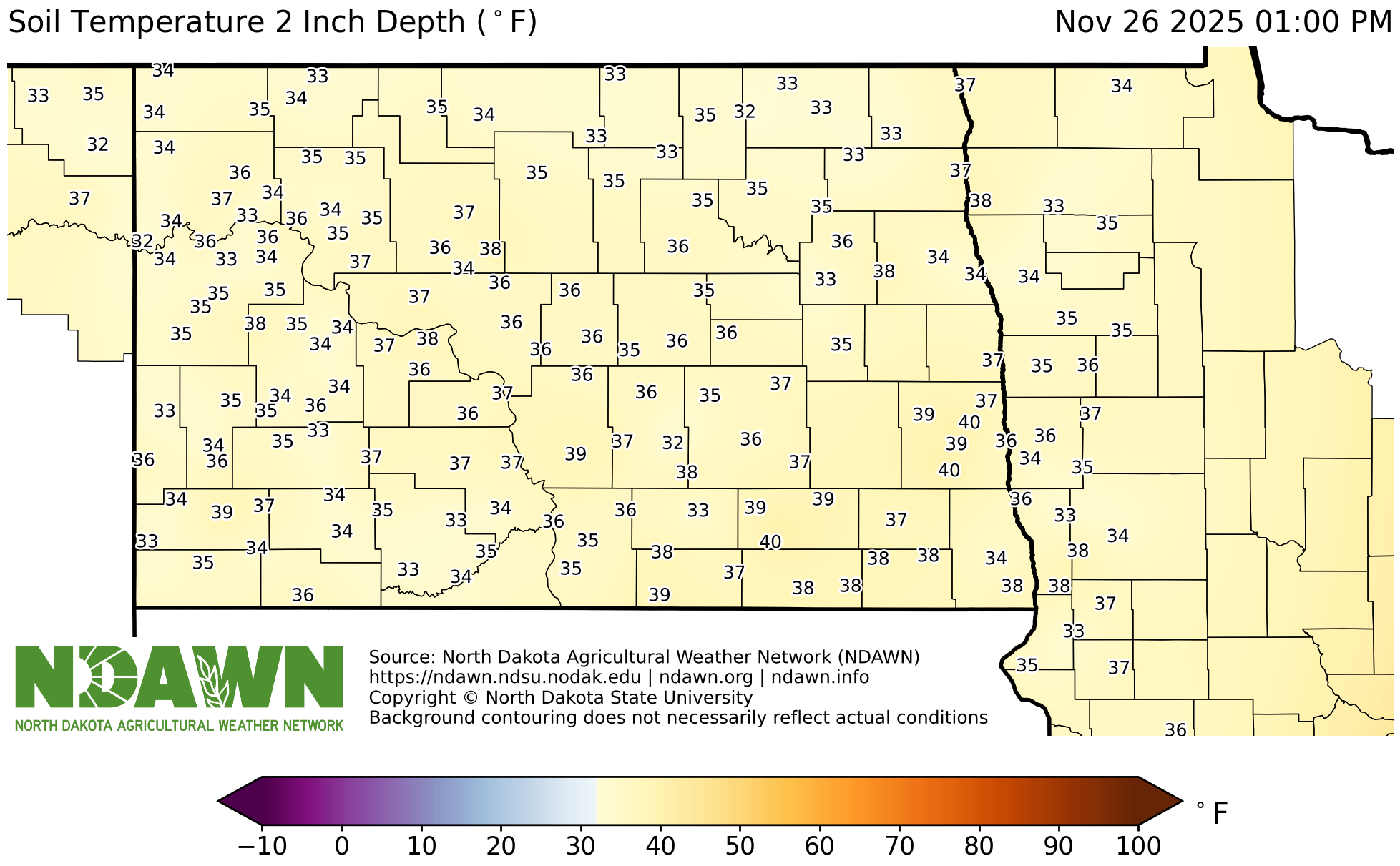
Soil and Climate Update
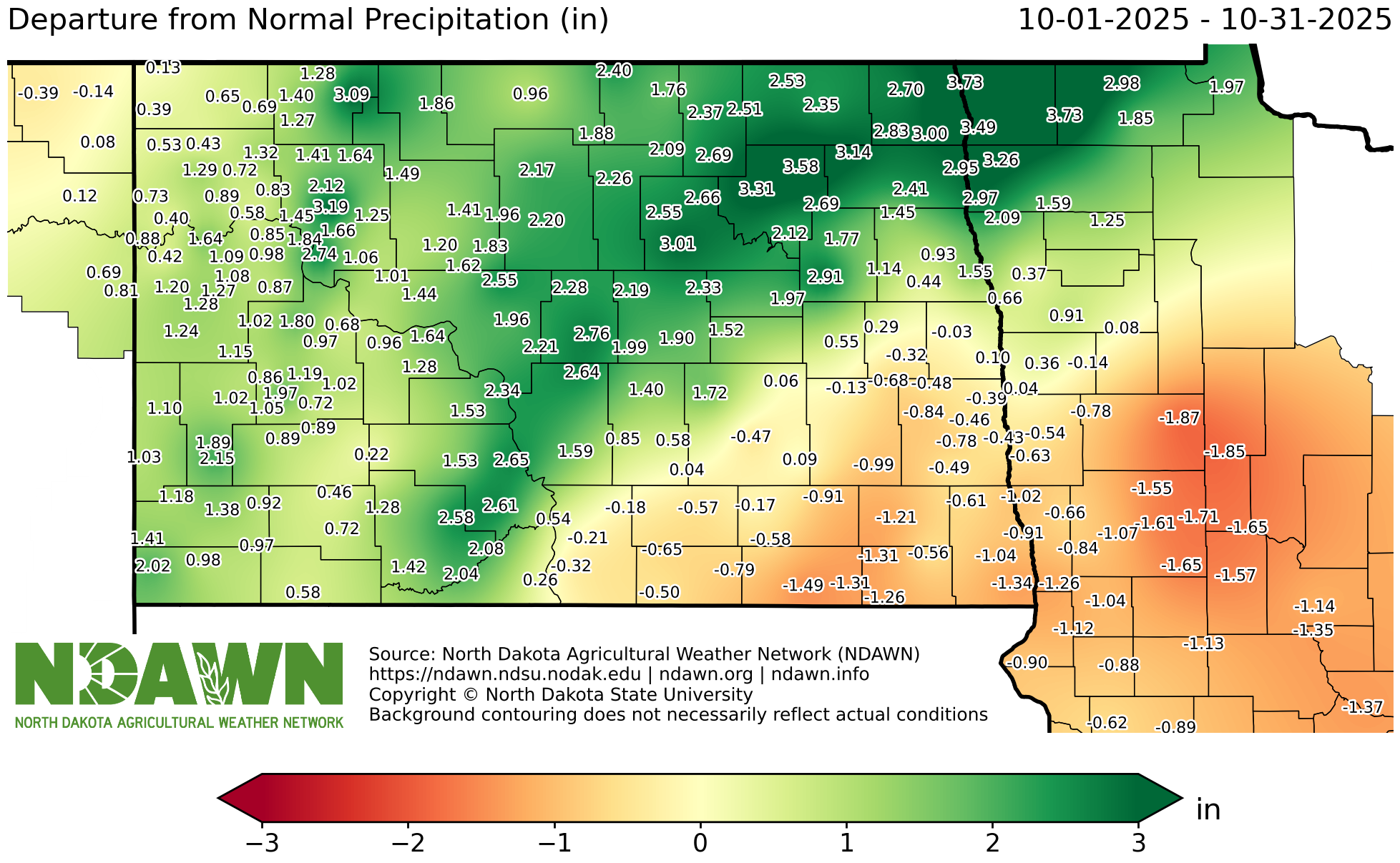
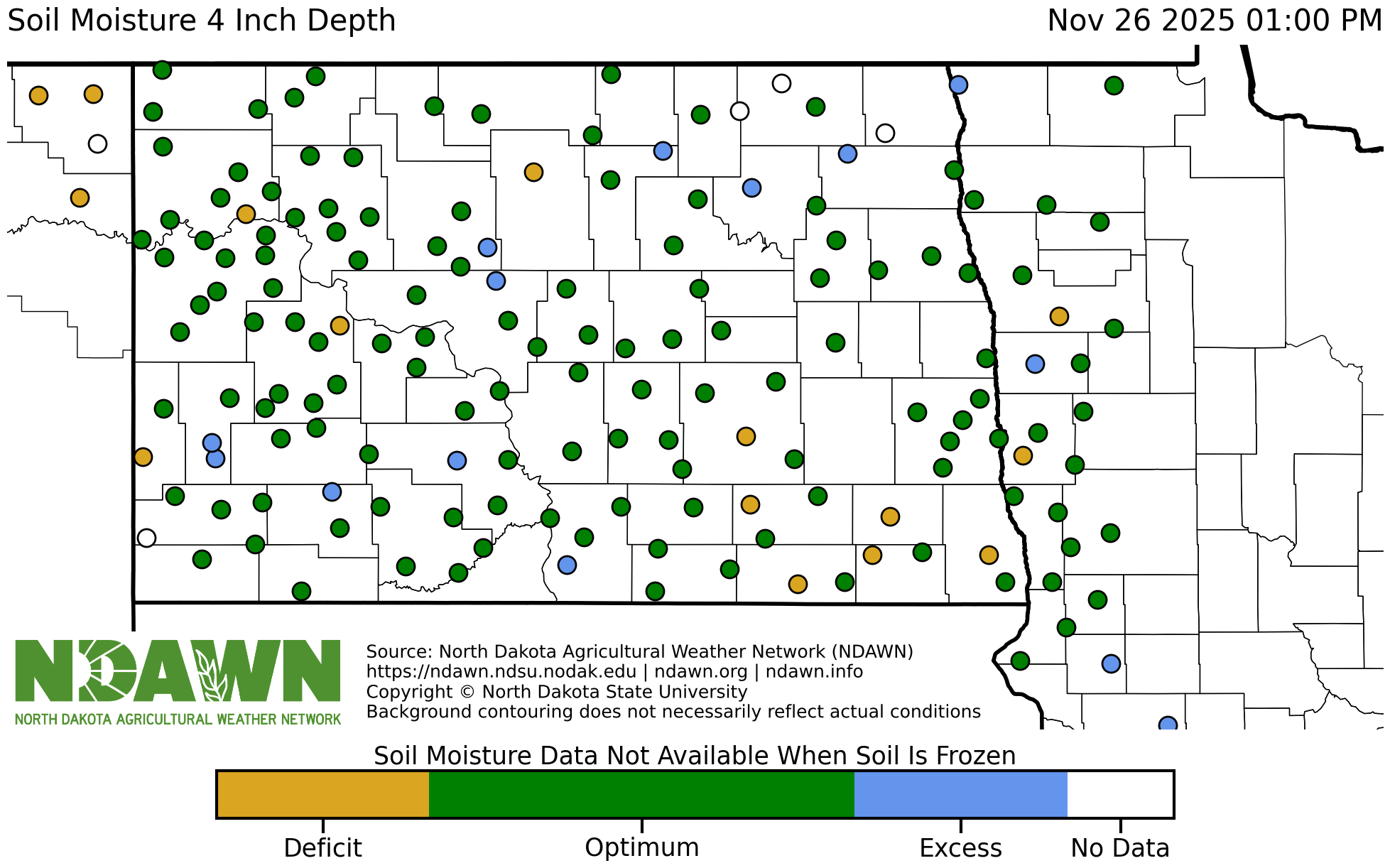
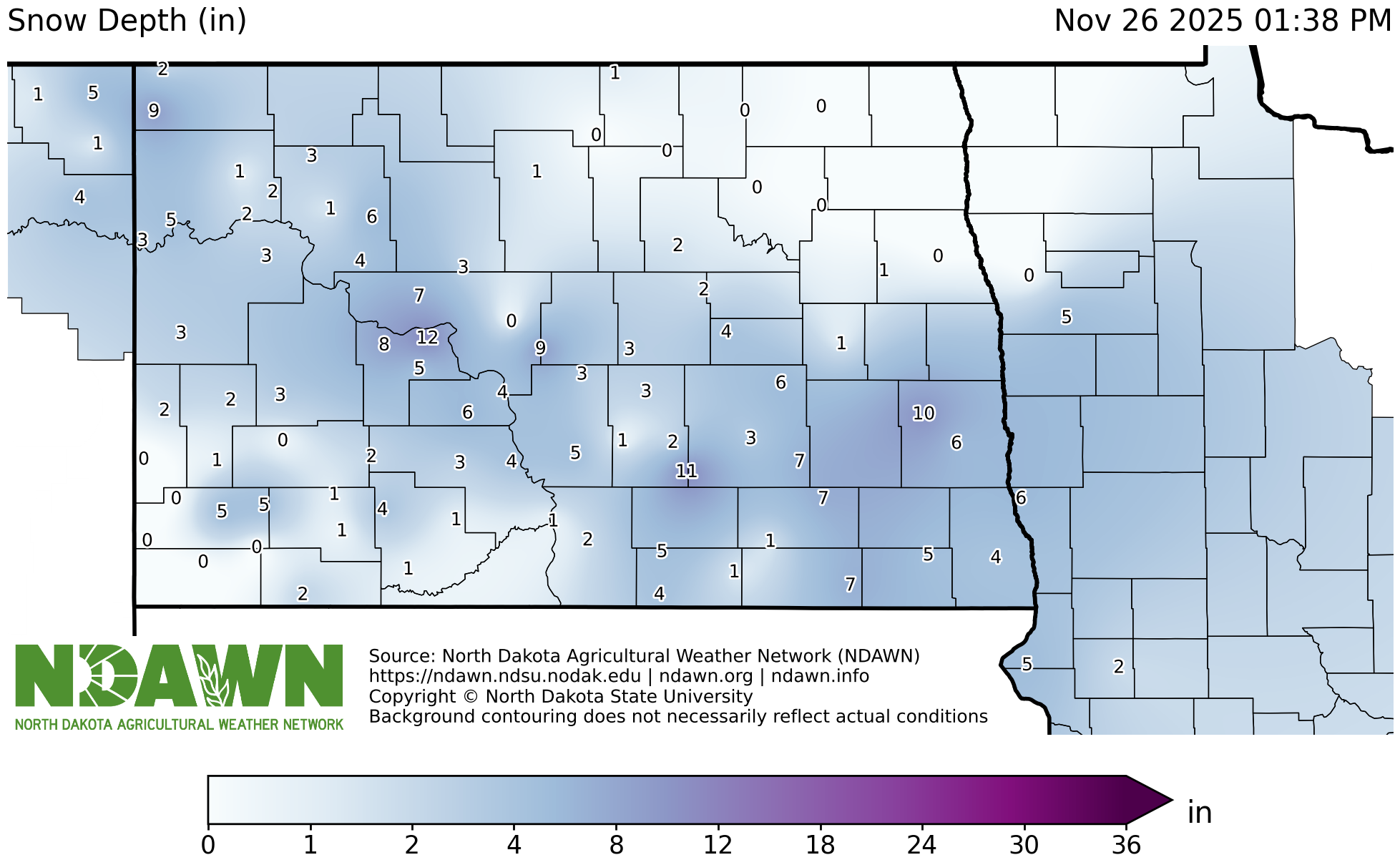
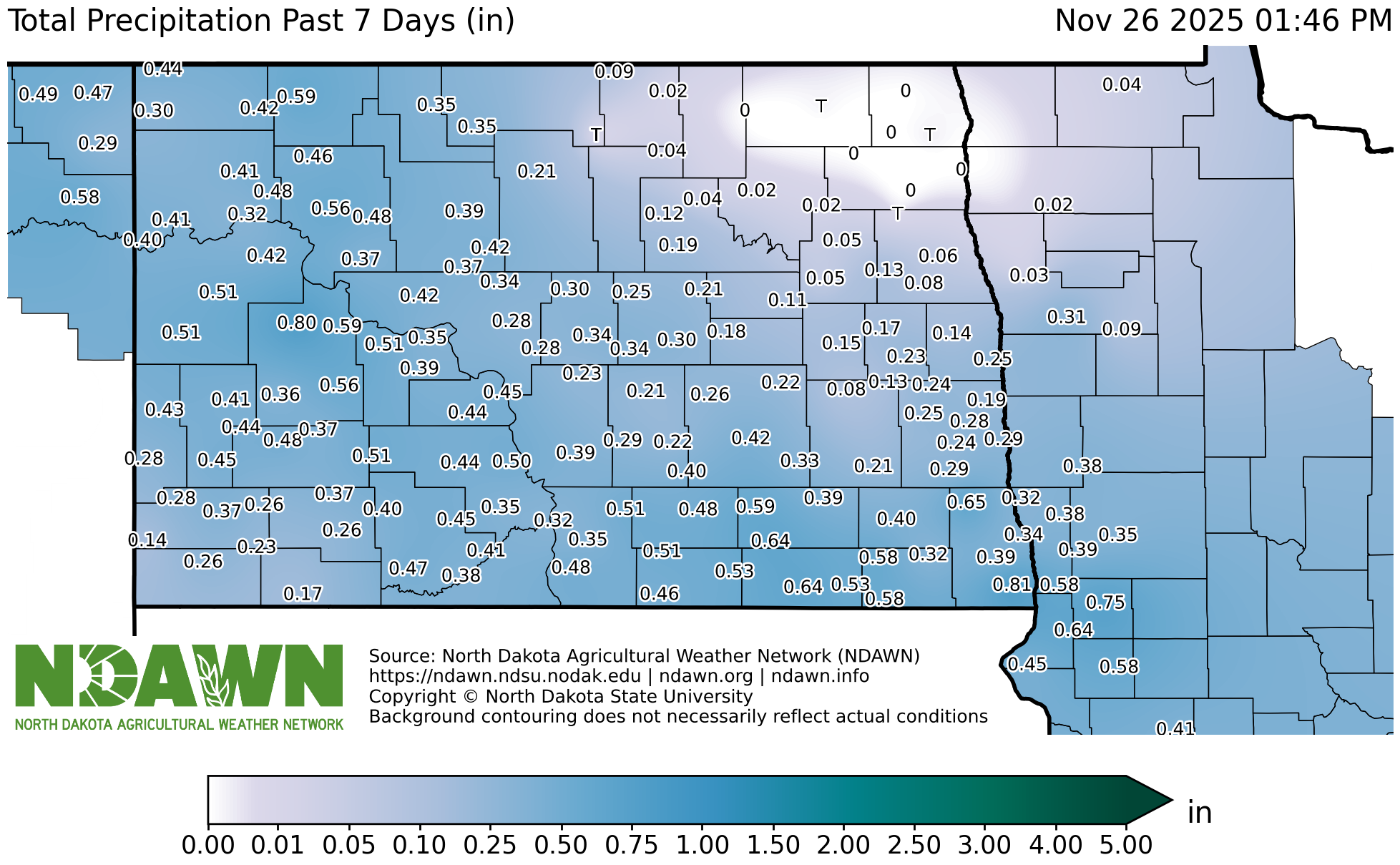
This October was warmer and wetter than normal across western North Dakota, although much of that moisture skipped northeast Montana. This leaves much of the region with optimum soil moisture going into the winter. The recent snow hit across the region, and provided NE MT with much needed moisture. Prior to the Thanksgiving holiday, soils weren't frozen yet but were getting close.